Productbeschrijving
Machining Capability
Our Gear, Pinion Shaft, Ring Gear Capabilities:
| Capabilities of Gears/ Splines | ||||||
| Item | Internal Gears and Internal Splines | External Gears and External Splines | ||||
| Milled | Shaped | Ground | Hobbed | Milled | Ground | |
| Max O.D. | 2500 mm | |||||
| Min I.D.(mm) | 30 | 320 | 20 | |||
| Max Face Width(mm) | 500 | 1480 | ||||
| Max DP | 1 | 0.5 | 1 | 0.5 | ||
| Max Module(mm) | 26 | 45 | 26 | 45 | ||
| DIN Class Level | DIN Class 8 | DIN Class 4 | DIN Class 8 | DIN Class 4 | ||
| Tooth Finish | Ra 3.2 | Ra 0.6 | Ra 3.2 | Ra 0.6 | ||
| Max Helix Angle | ±22.5° | ±45° | ||||
Our Main Products
1. Spur Gear
2. Planetary Gear
3. Metal Gears
4. Gear Wheel
5. Ring Gear
6. Gear Shaft
7. Helical Gear
8. Pinion Gear
9. Spline Shaft
Bedrijfsprofiel
1. 21 years experience in high quality gear, gear shaft’s production, sales and R&D.
2. Our Gear, Gear Shaft are certificated by ISO9001: 2008 and ISO14001: 2004.
3. CHINAMFG has more than 50 patents in high quality Gear, Gear Shaft manufacturing.
4. CHINAMFG products are exported to America, Europe.
5. Experience in cooperate with many Fortune 500 Companies
Our Advantages
1) In-house capability: OEM service as per customers’ requests, with in-house tooling design & fabricating
2) Professional engineering capability: On product design, optimization and performance analysis
3) Manufacturing capability range: DIN 3960 class 8 to 4, ISO 1328 class 8 to 4, AGMA 2000 class 10-15, JIS 1702-1703 class 0 to 2, etc.
4) Packing: Tailor-made packaging method according to customer’s requirement
5) Just-in-time delivery capability
Veelgestelde vragen
1. Q: Can you make as per custom drawing?
A: Yes, we can do that.
2. Q: If I don’t have drawing, what can you do for me?
A: If you don’t have drawing, but have the sample part, you may send us. We will check if we can make it or not.
3. Q: How do you make sure the quality of your products?
A: We will do a series of inspections, such as:
A. Raw material inspection (includes chemical and physical mechanical characters inspection),
B. Machining process dimensional inspection (includes: 1st pc inspection, self inspection, final inspection),
C. Heat treatment result inspection,
D. Gear tooth inspection (to know the achieved gear quality level),
E. Magnetic particle inspection (to know if there’s any cracks in the gear).
We will provide you the reports 1 set for each batch/ shipment.
| Sollicitatie: | Wind Turbine |
|---|---|
| Hardheid: | Verhard tandoppervlak |
| Versnellingsstand: | External Gear |
| Aanpassing: |
Beschikbaar
| Aanvraag op maat |
|---|
.shipping-cost-tm .tm-status-off{background: none;padding:0;color: #1470cc}
|
Verzendkosten:
Geschatte vrachtkosten per eenheid. |
Informatie over verzendkosten en geschatte levertijd. |
|---|
| Betaalmethode: |
|
|---|---|
|
Aanbetaling Volledige betaling |
| Munteenheid: | US$ |
|---|
| Retourneren en terugbetalingen: | Je kunt tot 30 dagen na ontvangst van de producten een terugbetaling aanvragen. |
|---|
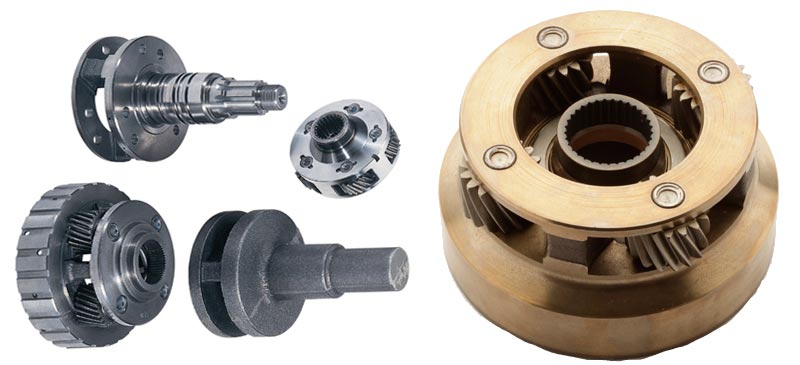
How do you calculate the gear ratio involving sun, planet, and ring gears?
The gear ratio in a planetary gear system can be calculated by considering the number of teeth on the sun gear, planet gears, and ring gear. The gear ratio determines the relationship between the input speed and the output speed of the system. Here’s how you can calculate the gear ratio:
- Step 1: Count the Teeth:
Count the number of teeth on the sun gear (S), the planet gears (P), and the ring gear (R). These numbers represent the respective gear’s tooth count.
- Step 2: Determine the Gear Arrangement:
Identify the gear arrangement. In a simple planetary gear system, the sun gear is at the center, surrounded by planet gears, and enclosed by the ring gear.
- Step 3: Calculate the Gear Ratio:
The gear ratio (GR) can be determined using the formula:
GR = (R + P) / S
Where:
- R represents the number of teeth on the ring gear
- P represents the number of teeth on the planet gears (assuming they have the same number of teeth)
- S represents the number of teeth on the sun gear
The resulting gear ratio represents the speed relationship between the input and output of the planetary gear system. A gear ratio greater than 1 indicates a speed reduction, while a gear ratio less than 1 indicates a speed increase.
It’s important to note that in more complex planetary gear systems, where there are multiple sets of planet gears or additional gears, the calculation of the gear ratio may involve considering multiple gear stages and their respective tooth counts.
In summary, to calculate the gear ratio involving sun, planet, and ring gears, you need to count the teeth on each gear and use the formula (R + P) / S, where R is the number of teeth on the ring gear, P is the number of teeth on the planet gears, and S is the number of teeth on the sun gear. This calculation provides the gear ratio that defines the speed relationship between the input and output of the planetary gear system.
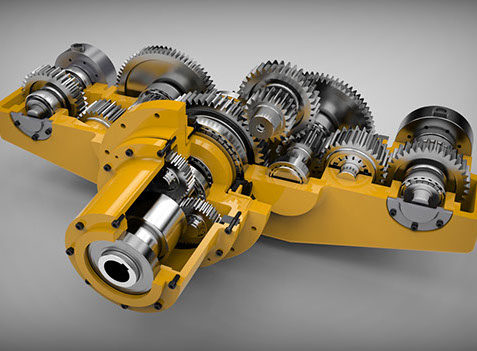
Kunnen planetaire tandwieloverbrengingen worden gebruikt in de lucht- en ruimtevaart?
Planetaire tandwieloverbrengingen worden veelvuldig gebruikt in de lucht- en ruimtevaart vanwege hun unieke eigenschappen en voordelen. Laten we eens kijken hoe planetaire tandwieloverbrengingen in de lucht- en ruimtevaartindustrie kunnen worden ingezet:
- Vliegtuigmotoren:
Planetaire tandwielen spelen een cruciale rol in vliegtuigmotoren, met name in de reductiekast. De reductiekast verbindt de hogesnelheidsturbine-as met de lagesnelheidspropeller-as, waardoor een efficiënte krachtoverbrenging mogelijk is met behoud van een optimale propellersnelheid. Planetaire tandwielen in de reductiekast helpen bij het bereiken van de vereiste overbrengingsverhoudingen en koppelomzetting, wat zorgt voor een soepele en betrouwbare werking van de motor.
- Landingsgestelsystemen:
Planetaire tandwieloverbrengingen worden ook gebruikt in landingsgestelsystemen van vliegtuigen. Deze tandwielen leveren het benodigde koppel en de kracht om het landingsgestel in en uit te schuiven tijdens het opstijgen en landen. Planetaire tandwieloverbrengingen bieden compactheid, een hoog koppelvermogen en de mogelijkheid om zware lasten te dragen, waardoor ze geschikt zijn voor deze cruciale toepassing.
- Aandrijfsystemen:
Aandrijfsystemen in de lucht- en ruimtevaart, zoals die voor de besturing van vliegoppervlakken, profiteren ook van het gebruik van planetaire tandwielen. Deze tandwielen maken een nauwkeurige en betrouwbare beweging van stuurvlakken mogelijk, zoals rolroeren, hoogteroeren en richtingsroeren. Het vermogen van planetaire tandwielen om hoge koppels te verwerken, nauwkeurige positionering te bieden en wisselende belastingen te weerstaan, maakt ze uitermate geschikt voor aandrijfsystemen.
- Mechanismen van satellieten en ruimtevaartuigen:
In satelliet- en ruimtevaarttoepassingen worden planetaire tandwielen gebruikt in diverse mechanismen. Ze zijn te vinden in aandrijvingen voor zonnepanelen, richtsystemen voor antennes en ontplooiingsmechanismen voor wetenschappelijke instrumenten. Planetaire tandwielen bieden compactheid, een hoge koppeloverdracht en het vermogen om de extreme omstandigheden van de ruimteomgeving te weerstaan.
- Hulpaggregaten (APU's):
APU's in vliegtuigen zijn verantwoordelijk voor het leveren van hulpvermogen tijdens grondoperaties en noodsituaties in de lucht. Planetaire tandwieloverbrengingen worden vaak gebruikt in APU-systemen om vermogen van de motor over te brengen naar de hulpsystemen, zoals elektrische generatoren of hydraulische pompen. Deze tandwieloverbrengingen zorgen voor een efficiënte vermogensoverdracht en een betrouwbare werking van de APU.
Samenvattend hebben planetaire tandwieloverbrengingen belangrijke toepassingen in de lucht- en ruimtevaart. Ze worden gebruikt in vliegtuigmotoren, landingsgestelsystemen, aandrijfsystemen, mechanismen van satellieten en ruimtevaartuigen, evenals hulpaggregaten. Het compacte formaat, het hoge koppelvermogen, de nauwkeurige positionering en de betrouwbare werking van planetaire tandwieloverbrengingen maken ze uitermate geschikt voor deze cruciale toepassingen in de lucht- en ruimtevaartindustrie.
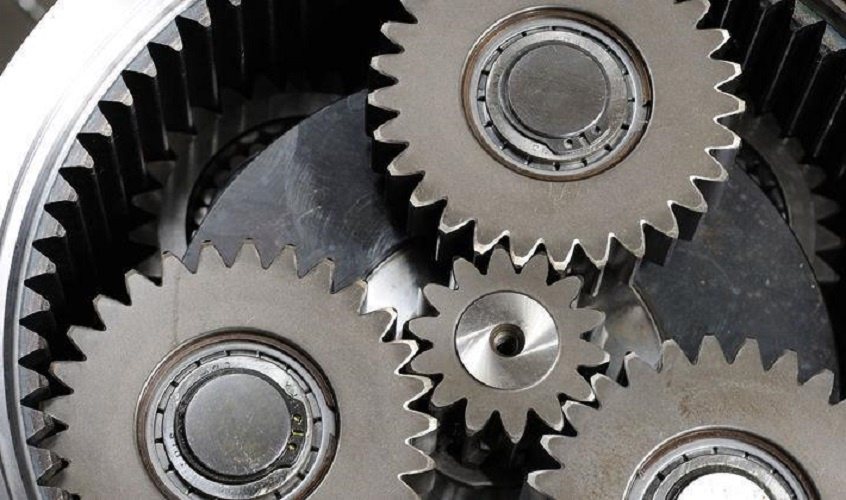
Can you describe the role of sun gears, planet gears, and ring gears in planetary systems?
In a planetary gear system, each component—the sun gear, planet gears, and ring gear—plays a crucial role in the overall operation and functionality. Let’s explore the roles of these gears:
- Sun Gear:
The sun gear is a central component in a planetary gear system. It is typically located at the center and is driven by an input source such as a motor or engine. The sun gear receives the input power and transmits it to the other gears in the system. As the sun gear rotates, it drives the rotation of the planet gears, which, in turn, contribute to the overall gear operation. The size and number of teeth on the sun gear determine the gear ratio and torque characteristics of the system.
- Planet Gears:
The planet gears are gears that surround the sun gear in a planetary gear system. They are typically smaller in size compared to the sun gear and are connected to a carrier or arm. The planet gears mesh with both the sun gear and the ring gear. As the sun gear rotates, it drives the rotation of the planet gears. The planet gears exhibit both rotational and orbital motion. While they rotate on their own axes, they also orbit around the sun gear. This combination of rotational and orbital movement allows the planet gears to transmit torque and contribute to the overall gear reduction or amplification. The arrangement and number of planet gears can vary depending on the specific design and requirements of the system.
- Ring Gear:
The ring gear is the outermost gear in a planetary gear system. It has internal teeth that mesh with the planet gears. The ring gear remains fixed or stationary while the sun gear and planet gears rotate. The interaction between the planet gears and the ring gear enables the gear system to achieve gear reduction or amplification. The size and number of teeth on the ring gear also influence the gear ratio and torque characteristics of the system.
In summary, the sun gear serves as the primary driver, receiving the input power and transmitting it to the other gears. The planet gears rotate and orbit around the sun gear, contributing to torque transmission and gear functionality. The ring gear remains fixed and meshes with the planet gears, allowing for gear reduction or amplification. Together, these gears work in harmony to achieve the desired gear ratios, torque transmission, and overall operation of planetary gear systems.


editor by CX 2023-11-02