คำอธิบายผลิตภัณฑ์
60mm DC SERVO MOTOR WITH BRAKE
รายละเอียด:
| General Specification | |
| (Item) | (Specification) |
| Winding type | Star |
| Hall effect angle | 120 120 degree electrical angle |
| Shaft run out | 0.571mm |
| Radial play | 0.02mm@450g |
| End play | 0.08mm@450g |
| Max.radial force | 115N @20mm form the flange |
| Max.axial force | 45N |
| Insulation class | Class B |
| Dielectric strength | 500VDC for 1 minute |
| Insulation resistance | 100MΩ Min.,500VDC |
| Electrical Specification | |||||
| Specification | หน่วย | JK60BLS01 | JK60BLS02 | JK60BLS03 | JK60BLS04 |
| Number Of Phase | Phase | 3 | |||
| Number Of Poles | Poles | 8 | |||
| Rated Voltage | VDC | 48 | |||
| Rated Speed | Rpm | 3000 | |||
| แรงบิดที่กำหนด | N.m | 0.3 | 0.6 | 0.9 | 1.2 |
| Rated Current | Amps | 2.8 | 5.2 | 7.5 | 9.5 |
| Rated Power | W | 94 | 188 | 283 | 377 |
| Peak Torque | N.m | 0.9 | 1.8 | 2.7 | 3.6 |
| Peak Current | Amps | 8.4 | 15.6 | 22.5 | 28.5 |
| Back E.M.F | V/Krpm | 12.1 | 12.6 | 12.4 | 13.3 |
| Torque Constant | N.m/A | 0.116 | 0.12 | 0.118 | 0.127 |
| Rotor Inertia | Kg.c | 0.24 | 0.48 | 0.72 | 0.96 |
| Body Length | มม. | 78 | 99 | 120 | 141 |
| น้ำหนัก | Kg | 0.85 | 1.25 | 1.65 | 2.05 |
| Sensor | /Honeywell | ||||
| Insulation Class | B | ||||
| Degree of Protection | IP30 | ||||
| Storage Temperature | -25~+70ºC | ||||
| Operating Temperature | -15~+50ºC | ||||
| Working Humidity | 85% RH | ||||
Drawing:
Company Profile:
HangZhou CHINAMFG CO.,LTD (HangZhou Jingkong Motor&Electric Appliance Co.,Ltd)is an ISO9001 Professional
manufacturer. Was established in 2011 year. We are a professional manufacturer in HangZhou city, China. Production Capacity
exceeds more than 1million motors per year.
Our Company offers 3 major series of products: Hybrid Stepper motors, Brushless Dc motor and Dc Brush motor.
We are always continues develop new type models.We are also have several joint venture companies who specialized in the
production of AC servo motor, PM stepper motors, Spindlemotor and Motor drivers. We export our motors to more than 30
countries Such as United States, Germany, Russia, Turkey, Brazil and so on.
Jkongmotor sold to major manufacturing Companies for Industry of automation, medical and health care equipment,
3d printermachines, packing devices, Information Technology, household appliance products. We have an Engineering team
with many years of experience in application Engineering, design Engineering with the latest advances equipment. Our
Engineering Staff provides the finest quality product with service after the product is delivered to our Customers.
| แอปพลิเคชัน: | Universal, Industrial, Household Appliances, Car, Power Tools |
|---|---|
| Operating Speed: | High Speed |
| การทำงาน: | Control |
| Casing Protection: | Closed Type |
| Number of Poles: | 8 |
| Structure and Working Principle: | Brushless |
| ตัวอย่าง: |
US$ 28.5/Piece
1 ชิ้น (สั่งขั้นต่ำ) | |
|---|
| การปรับแต่ง: |
มีอยู่
| คำขอที่กำหนดเอง |
|---|
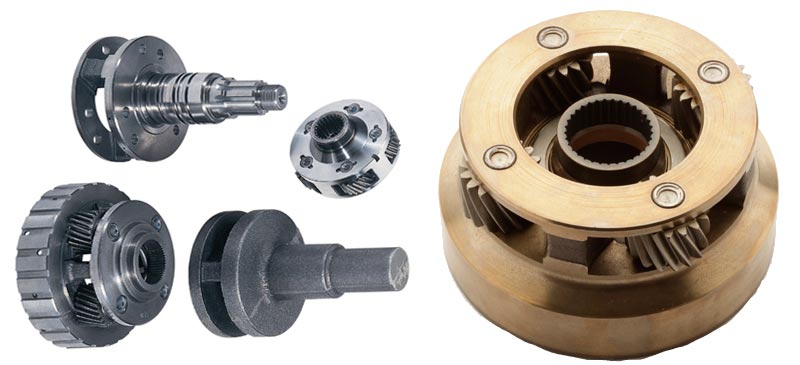
How do you calculate the gear ratio involving sun, planet, and ring gears?
The gear ratio in a planetary gear system can be calculated by considering the number of teeth on the sun gear, planet gears, and ring gear. The gear ratio determines the relationship between the input speed and the output speed of the system. Here’s how you can calculate the gear ratio:
- Step 1: Count the Teeth:
Count the number of teeth on the sun gear (S), the planet gears (P), and the ring gear (R). These numbers represent the respective gear’s tooth count.
- Step 2: Determine the Gear Arrangement:
Identify the gear arrangement. In a simple planetary gear system, the sun gear is at the center, surrounded by planet gears, and enclosed by the ring gear.
- Step 3: Calculate the Gear Ratio:
The gear ratio (GR) can be determined using the formula:
GR = (R + P) / S
Where:
- R represents the number of teeth on the ring gear
- P represents the number of teeth on the planet gears (assuming they have the same number of teeth)
- S represents the number of teeth on the sun gear
The resulting gear ratio represents the speed relationship between the input and output of the planetary gear system. A gear ratio greater than 1 indicates a speed reduction, while a gear ratio less than 1 indicates a speed increase.
It’s important to note that in more complex planetary gear systems, where there are multiple sets of planet gears or additional gears, the calculation of the gear ratio may involve considering multiple gear stages and their respective tooth counts.
In summary, to calculate the gear ratio involving sun, planet, and ring gears, you need to count the teeth on each gear and use the formula (R + P) / S, where R is the number of teeth on the ring gear, P is the number of teeth on the planet gears, and S is the number of teeth on the sun gear. This calculation provides the gear ratio that defines the speed relationship between the input and output of the planetary gear system.
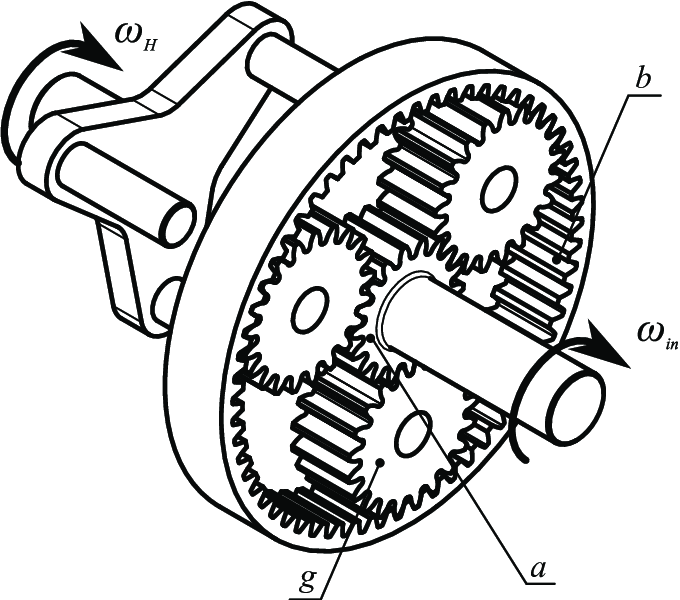
เฟืองดาวเคราะห์รับมือกับการเปลี่ยนแปลงการเข้าคู่กันของฟันเฟืองในระหว่างการทำงานได้อย่างไร?
เฟืองดาวเคราะห์ถูกออกแบบมาเพื่อรับมือกับการเปลี่ยนแปลงในการประกบฟันเฟืองระหว่างการทำงาน ทำให้มั่นใจได้ถึงประสิทธิภาพที่ราบรื่นและเชื่อถือได้ มาดูกันว่าเฟืองดาวเคราะห์รับมือกับการเปลี่ยนแปลงเหล่านี้ได้อย่างไร:
- ค่าความคลาดเคลื่อน:
เฟืองดาวเคราะห์ได้รับการออกแบบโดยคำนึงถึงความคลาดเคลื่อนในระดับหนึ่ง หมายความว่า การเปลี่ยนแปลงเล็กน้อยในการประกบฟันเฟืองอันเนื่องมาจากความคลาดเคลื่อนในการผลิต การประกอบ หรือสภาวะการทำงาน จะสามารถรองรับได้โดยไม่ส่งผลกระทบอย่างมีนัยสำคัญต่อระบบเฟือง ฟันเฟืองได้รับการออกแบบอย่างพิถีพิถันด้วยรูปทรง ระยะห่าง และระยะคลายตัวที่เหมาะสม เพื่อให้สามารถรองรับความคลาดเคลื่อนในระดับหนึ่งได้โดยยังคงการทำงานที่ถูกต้อง
- การกระจายภาระ:
การจัดเรียงเฟืองดาวเคราะห์หลายตัวในระบบเฟืองดาวเคราะห์ช่วยกระจายภาระไปยังฟันเฟืองหลายซี่ เฟืองดาวเคราะห์แต่ละตัวจะแบ่งภาระกับเฟืองที่อยู่ติดกัน ลดความเครียดบนฟันเฟืองแต่ละซี่ และส่งเสริมการเข้ากันของฟันเฟืองอย่างสม่ำเสมอ ความสามารถในการกระจายภาระนี้ช่วยลดการสึกหรอเฉพาะจุด เสียง และการสั่นสะเทือน ส่งผลให้การทำงานราบรื่นและมีประสิทธิภาพมากขึ้น
- การติดตั้งและการรองรับที่ยืดหยุ่น:
เฟืองดาวเคราะห์มักติดตั้งอยู่บนโครงสร้างรองรับที่ยืดหยุ่นได้ เช่น ตลับลูกปืนหรือข้อต่อแบบยืดหยุ่น ส่วนประกอบเหล่านี้ช่วยดูดซับและชดเชยความแปรผันเล็กน้อยในการประกบฟันเฟืองระหว่างการทำงาน ระบบการติดตั้งและการรองรับที่ยืดหยุ่นได้ให้ความยืดหยุ่นและความอ่อนตัวในระดับหนึ่ง ทำให้เฟืองสามารถปรับตัวเองและรักษาการสัมผัสฟันเฟืองที่เหมาะสมภายใต้สภาวะการทำงานที่แตกต่างกันได้
- การหล่อลื่นและการระบายความร้อน:
การหล่อลื่นและการระบายความร้อนที่เหมาะสมมีบทบาทสำคัญในการรับมือกับการเปลี่ยนแปลงในการเข้าคู่กันของฟันเฟือง สารหล่อลื่นช่วยลดแรงเสียดทานและการสึกหรอระหว่างฟันเฟือง ทำให้การทำงานราบรื่นและลดผลกระทบจากการเปลี่ยนแปลงในการเข้าคู่กันของฟันเฟือง นอกจากนี้ กลไกการระบายความร้อนที่มีประสิทธิภาพยังช่วยระบายความร้อนที่เกิดขึ้นระหว่างการทำงาน ป้องกันอุณหภูมิสูงเกินไปซึ่งอาจส่งผลต่อประสิทธิภาพการทำงานของเฟือง
- โครงสร้างแข็งแรงทนทาน:
โดยทั่วไปแล้ว เฟืองดาวเคราะห์จะถูกสร้างขึ้นโดยใช้วัสดุที่มีความแข็งแรงสูงและเทคนิคการผลิตที่แม่นยำ โครงสร้างที่แข็งแรงนี้ช่วยเพิ่มความสามารถของระบบเฟืองในการทนต่อการเปลี่ยนแปลงในการเข้าคู่ของฟันเฟือง ด้วยการรับประกันคุณภาพของชิ้นส่วนเฟือง การอบชุบความร้อนที่เหมาะสม และการควบคุมคุณภาพอย่างเข้มงวด เฟืองดาวเคราะห์จึงถูกสร้างขึ้นเพื่อรับมือกับภาระและการเปลี่ยนแปลงแบบไดนามิกที่เกิดขึ้นระหว่างการใช้งาน
โดยสรุปแล้ว เฟืองดาวเคราะห์สามารถรับมือกับการเปลี่ยนแปลงในการประกบฟันได้ด้วยความทนทานต่อการเยื้องศูนย์ การกระจายแรงโหลดระหว่างเฟืองดาวเคราะห์หลายตัว การติดตั้งและการรองรับที่ยืดหยุ่น การหล่อลื่นและการระบายความร้อนที่มีประสิทธิภาพ และโครงสร้างที่แข็งแรง การออกแบบและคุณสมบัติเหล่านี้ทำให้เฟืองดาวเคราะห์สามารถรักษาการสัมผัสของฟันที่เหมาะสม ลดการสึกหรอและเสียงรบกวน และรับประกันประสิทธิภาพที่เชื่อถือได้ในการใช้งานต่างๆ รวมถึงระบบส่งกำลังในรถยนต์ เครื่องจักรกลอุตสาหกรรม และระบบส่งกำลัง
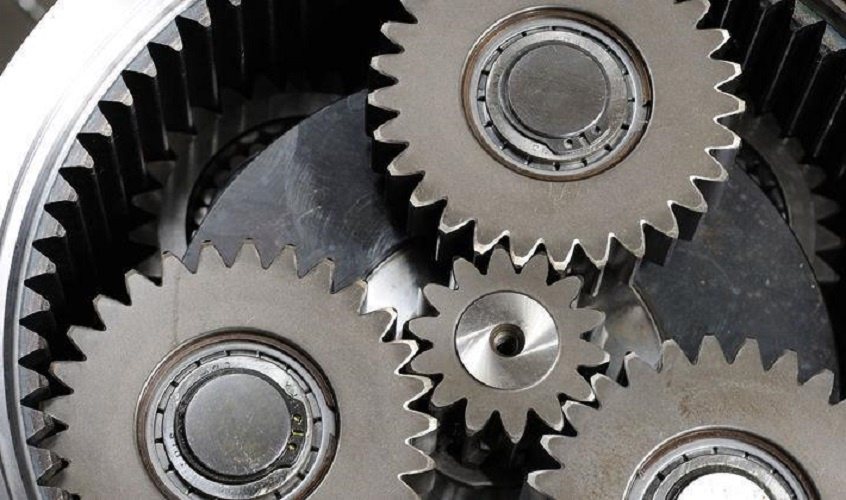
Can you describe the role of sun gears, planet gears, and ring gears in planetary systems?
In a planetary gear system, each component—the sun gear, planet gears, and ring gear—plays a crucial role in the overall operation and functionality. Let’s explore the roles of these gears:
- Sun Gear:
The sun gear is a central component in a planetary gear system. It is typically located at the center and is driven by an input source such as a motor or engine. The sun gear receives the input power and transmits it to the other gears in the system. As the sun gear rotates, it drives the rotation of the planet gears, which, in turn, contribute to the overall gear operation. The size and number of teeth on the sun gear determine the gear ratio and torque characteristics of the system.
- Planet Gears:
The planet gears are gears that surround the sun gear in a planetary gear system. They are typically smaller in size compared to the sun gear and are connected to a carrier or arm. The planet gears mesh with both the sun gear and the ring gear. As the sun gear rotates, it drives the rotation of the planet gears. The planet gears exhibit both rotational and orbital motion. While they rotate on their own axes, they also orbit around the sun gear. This combination of rotational and orbital movement allows the planet gears to transmit torque and contribute to the overall gear reduction or amplification. The arrangement and number of planet gears can vary depending on the specific design and requirements of the system.
- Ring Gear:
The ring gear is the outermost gear in a planetary gear system. It has internal teeth that mesh with the planet gears. The ring gear remains fixed or stationary while the sun gear and planet gears rotate. The interaction between the planet gears and the ring gear enables the gear system to achieve gear reduction or amplification. The size and number of teeth on the ring gear also influence the gear ratio and torque characteristics of the system.
In summary, the sun gear serves as the primary driver, receiving the input power and transmitting it to the other gears. The planet gears rotate and orbit around the sun gear, contributing to torque transmission and gear functionality. The ring gear remains fixed and meshes with the planet gears, allowing for gear reduction or amplification. Together, these gears work in harmony to achieve the desired gear ratios, torque transmission, and overall operation of planetary gear systems.


editor by CX 2023-11-02