Descrição do produto
Peças de metalurgia do pó de excelente qualidade, peças metálicas sinterizadas.
Podemos oferecer diversas peças de metalurgia do pó, incluindo peças à base de ferro e cobre, com a mais alta qualidade e o melhor preço. Basta nos enviar o desenho ou a amostra, e nós as produziremos de acordo com as suas especificações. Se tiver interesse em nossos produtos, não hesite em nos contatar. Teremos prazer em oferecer a melhor qualidade e o melhor serviço. Obrigado!
Como trabalhamos com nossos clientes?
1. Para um especialista em design ou uma grande empresa com sua própria equipe de engenharia: preferimos receber um pacote completo de solicitação de cotação (RFQ), incluindo desenho, modelo 3D, quantidade e imagens;
2. Para o dono de uma startup ou um novato na área de engenharia: basta enviar uma ideia que você queira testar, você nem precisa saber o que é fundição;
3. Nossa equipe de vendas entrará em contato com você em até 24 horas para confirmar mais detalhes e fornecer o prazo estimado de entrega;
4. Nossa equipe de engenharia avaliará sua solicitação e nos enviará uma proposta dentro de 1 a 3 dias úteis.
5. Podemos agendar uma reunião de comunicação técnica entre você e nossos engenheiros a qualquer momento, se necessário.
| Local de origem: | Jangsu, China |
| Tipo: | sinterização por metalurgia do pó |
| Tipo de peças de reposição: | Peças de metalurgia do pó |
| Relatório de teste de máquinas: | Oferecido |
| Material: | Ferro, aço inoxidável, cobre |
| Principais argumentos de venda: | Garantia de qualidade |
| Tipo de molde: | Aço tungstênio |
| Padrão de material: | MPIF 35, DIN 3571, JIS Z 2550 |
| Aplicativo: | Eletrodomésticos pequenos, fechaduras, ferramentas elétricas, automóveis. |
| Nome da marca: | SERVIÇO OEM |
| Revestimento: | Personalizado |
| Serviço pós-venda: | Suporte online |
| Processamento: | Metalurgia do Pó, Usinagem CNC |
| Metalurgia do Pó: | Têmpera por alta frequência, imersão em óleo |
| Controle de qualidade: | Inspeção 100% |
As vantagens do processo de metalurgia do pó
1. Custo-benefício
Os produtos finais podem ser compactados pelo método de metalurgia do pó, não necessitando ou podendo encurtar o processamento com máquinas. Isso permite economizar muito material e reduzir o custo de produção.
2. Formas complexas
A metalurgia do pó permite obter formas complexas diretamente das ferramentas de compactação, sem qualquer operação de usinagem, como dentes, estrias, perfis, geometrias frontais, etc.
3. Alta precisão
As tolerâncias alcançáveis na direção perpendicular à compactação são tipicamente IT 8-9 após a sinterização, podendo ser melhoradas para IT 5-7 após o dimensionamento. Operações adicionais de usinagem podem aprimorar a precisão.
4. Autolubrificação
A porosidade interconectada do material pode ser preenchida com óleos, obtendo-se assim um rolamento autolubrificante: o óleo proporciona lubrificação constante entre o rolamento e o eixo, e o sistema não necessita de qualquer lubrificante externo adicional.
5. Tecnologia verde
O processo de fabricação de componentes sinterizados é certificado como ecológico, pois gera muito pouco desperdício de material, o produto é reciclável e apresenta boa eficiência energética, uma vez que o material não é fundido.
Perguntas frequentes
P1: Qual é o tipo de pagamento?
A: Normalmente, você deve pagar antecipadamente 50% do valor total. O saldo deve ser pago antes do envio.
Q2: Como garantir a alta qualidade?
A: Inspeção 100%. Possuímos equipamentos de teste de alta precisão da Carl Zeiss e um departamento de testes para garantir que todos os produtos atendam aos padrões de tamanho, aparência e pressão.
P3: Em quanto tempo vocês levarão para me responder?
A: Entraremos em contato com você em 12 horas, assim que possível.
Q4. Qual é o prazo de entrega?
R: Geralmente, leva de 25 a 35 dias após o recebimento do seu pagamento antecipado. O prazo de entrega específico depende dos itens e da quantidade do seu pedido. Além disso, se o item não for padronizado, precisamos considerar um prazo adicional de 10 a 15 dias para a fabricação das ferramentas/moldes.
Q5. Vocês conseguem produzir de acordo com as amostras ou desenhos?
A: Sim, podemos produzir com base em suas amostras ou desenhos técnicos. Podemos construir os moldes e dispositivos necessários.
Q6: E quanto ao custo das ferramentas?
A: A taxa de ferramental é cobrada apenas uma vez no primeiro pedido; em pedidos futuros, não haverá cobrança adicional, mesmo em casos de reparo ou manutenção de ferramentas.
Q7: Qual é a sua política de amostra?
A: Podemos fornecer a amostra se tivermos peças prontas em estoque, mas os clientes precisam pagar o custo da amostra e o custo do frete.
Q8: Como vocês fazem para que nosso relacionamento comercial seja duradouro e de qualidade?
A: 1. Mantemos boa qualidade e preços competitivos para garantir que nossos clientes se beneficiem;
2. Respeitamos cada cliente como nosso amigo e fazemos negócios e amizades com sinceridade, independentemente de sua origem.
Planetary Gearbox Advantages and Disadvantages
A planetary gearbox is a type of mechanical drive with a single output shaft. They are suitable for both clockwise and counterclockwise rotations, have less inertia, and operate at higher speeds. Here are some advantages and disadvantages of this type of gearbox. Let us see what these advantages are and why you should use them in your applications. Listed below are some of the benefits of planetary gearboxes.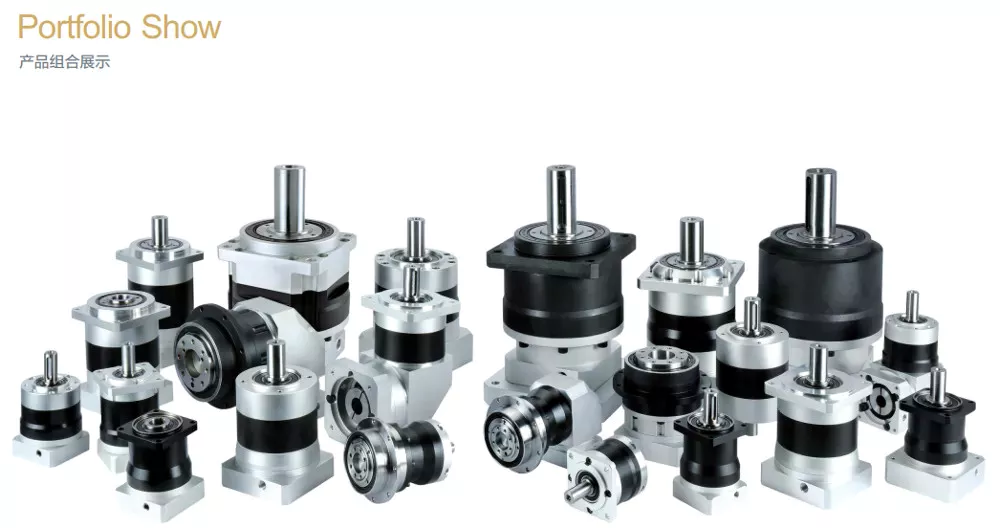
Suitable for counterclockwise and clockwise rotation
If you want to teach children about the clock hands, you can buy some resources for counterclockwise and asymmetrical rotation. These resources include worksheets for identifying degrees of rotation, writing rules for rotation, and visual processing. You can also use these resources to teach angles. For example, the translation of shapes activity pack helps children learn about the rotation of geometric shapes. Similarly, the visual perception activity sheet helps children understand how to process information visually.
Various studies have been done to understand the anatomical substrate of rotations. In a recent study, CZPT et al. compared the position of the transitional zone electrocardiographically and anatomically. The authors found that the transitional zone was normal in 9 of 33 subjects, indicating that rotation is not a sign of disease. Similarly, a counterclockwise rotation may be caused by a genetic or environmental factor.
The core tip data should be designed to work in both clockwise and counterclockwise rotation. Counterclockwise rotation requires a different starting point than a clockwise rotation. In North America, star-delta starting is used. In both cases, the figure is rotated about its point. Counterclockwise rotation, on the other hand, is done in the opposite direction. In addition, it is possible to create counterclockwise rotation using the same gimbal.
Despite its name, both clockwise and counterclockwise rotation requires a certain amount of force to rotate. When rotating clockwise, the object faces upwards. Counterclockwise rotation, on the other hand, starts from the top position and heads to the right. If rotating in the opposite direction, the object turns counterclockwise, and vice versa. The clockwise movement, in contrast, is the reverse of counterclockwise rotation.
Has less inertia
The primary difference between a planetary gearbox and a normal pinion-and-gear reducer is the ratio. A planetary gearbox will produce less inertia, which is an important advantage because it will reduce torque and energy requirements. The ratio of the planetary gearbox to its fixed axis counterpart is a factor of three. A planetary gearbox has smaller gears than a conventional planetary, so its inertia is proportional to the number of planets.
Planetary gears are less inertia than spur gears, and they share the load across multiple gear teeth. This means that they will have low backlash, and this is essential for applications with high start-stop cycles and frequent rotational direction changes. Another benefit is the high stiffness. A planetary gearbox will have less backlash than a spur gearbox, which means that it will be more reliable.
A planetary gearbox can use either spur or helical gears. The former provides higher torque ratings while the latter has less noise and stiffness. Both types of gears are useful in motorsports, aerospace, truck transmissions, and power generation units. They require more assembly time than a conventional parallel shaft gear, but the PD series is the more efficient alternative. PD series planetary gears are suitable for many applications, including servo and robotics.
In contrast, a planetary gear set can have varying input speed. This can affect the frequency response of the gearset. A mathematical model of the two-stage planetary gears has non-stationary effects and correlates with experimental findings. Fig. 6.3 shows an addendum. The dedendum’s minimum value is approximately 1.25m. When the dedendum is at its smallest, the dedendum has less inertia.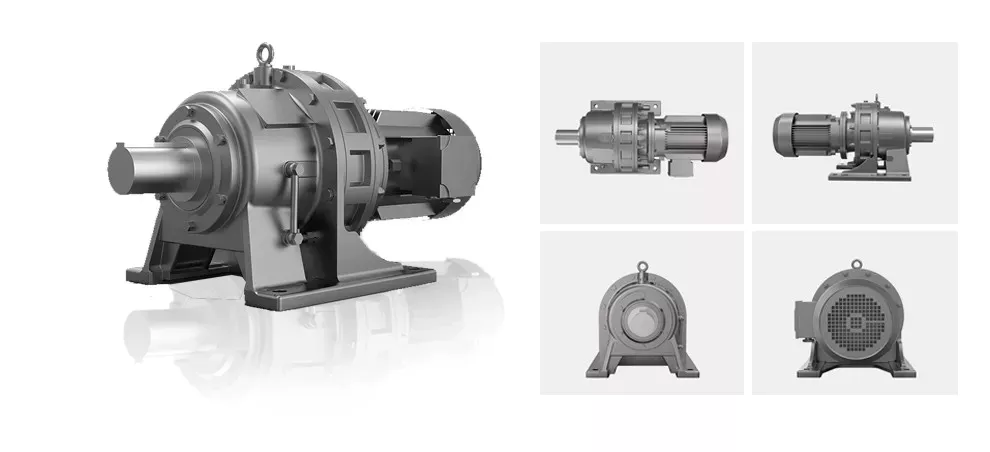
Offers greater reliability
The Planetary Gearbox is a better option for driving a vehicle than a standard spur gearbox. A planetary gearbox is less expensive, and they have better backlash, higher load capacity, and greater shock loads. Unlike spur gearboxes, however, mechanical noise is virtually nonexistent. This makes them more reliable in high-shock situations, as well as in a wide range of applications.
The Economy Series has the same power density and torque capacity of the Precision Helical Series, but it lacks the precision of the latter. In contrast, Economy Series planetary gearboxes feature straight spur planetary gearing, and they are used in applications requiring high torque. Both types of gearboxes are compatible with NEMA servo motors. If torque density is important, a planetary gearbox is the best choice.
The Dispersion of External Load: The SSI model has been extensively used to model the reliability of planetary gear systems. This model takes the contact force and fatigue strength of the system as generalized stress and strength. It also provides a theoretical framework to evaluate the reliability of planetary gear systems. It also has many other advantages that make it the preferred choice for high-stress applications. The Planetary Gearbox offers greater reliability and efficiency than traditional rack and pinion gear systems.
Planetary gearing has greater reliability and compact design. Its compact design allows for wider applications with concerns about space and weight. Additionally, the increased torque and reduction makes planetary gearboxes an excellent choice for a wide variety of applications. There are 3 major types of planetary gearboxes, each with its own advantages. This article describes a few of them. Once you understand their workings, you will be able to choose the best planetary gearbox for your needs.
Has higher operating speeds
When you look at planetary gearboxes, you might be confused about which 1 to choose. The primary issue is the application of the gearbox. You must also decide on secondary factors like noise level, corrosion resistance, construction, price, and availability worldwide. Some constructors work faster than others and deliver the gearboxes on the same day. However, the latter ones often deliver the planetary gearbox out of stock.
Compared to conventional gearboxes, a planetary gearbox can run at higher speeds when the input speed fluctuates. However, these gears are not very efficient in high-speed applications because of their increased noise levels. This makes planetary gears unsuitable for applications involving a great deal of noise. That is why most planetary gears are used in small-scale applications. There are some exceptions, but in general, a planetary gearbox is better suited for applications with higher operating speeds.
The basic planetary gearbox is a compact alternative to normal pinion-and-gear reducers. They can be used in a wide variety of applications where space and weight are concerns. Its efficiency is also higher, delivering 97% of the power input. It comes in 3 different types based on the performance. A planetary gearbox can also be classified as a worm gear, a spur gear, or a sprocket.
A planetary gearhead has a high-precision design and can generate substantial torque for their size. It also reduces backlash to 2 arc-min. Additionally, it is lubricated for life, which means no maintenance is needed. It can fit into a small machine envelope and has a small footprint. Moreover, the helical crowned gearing provides fast positioning. A sealed gearbox prevents abrasive dust from getting into the planetary gearhead.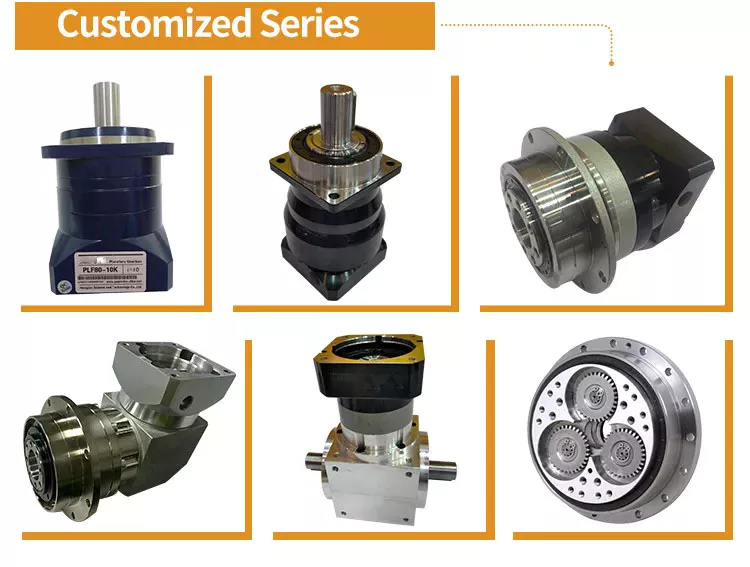
Tem desvantagens
The design of a planetary gearbox is compact and enables high torque and load capability in a small space. This gear arrangement also reduces the possibility of wear and tear. Planet gears are arranged in a planetary fashion, allowing gears to shift under load and a uniform distribution of torque. However, some disadvantages of planetary gears must be considered before investing in this gearbox.
While the planetary gearbox is a high precision motion-control device, its design and maintenance requirements are a concern. The bearing load is high, requiring frequent lubrication. Also, they are inaccessible. Despite these drawbacks, planetary gearboxes are suitable for a variety of tasks. They also have low backlash and high torsional stiffness, making them excellent choices for many applications.
As a result, the speed of a planetary gearbox varies with load and speed. At lower ratios, the sun gear becomes too large in relation to the planet gears. As the ratio increases, the sun gear will become too low, reducing torque. The planetary gears also reduce their torque in high-speed environments. Consequently, the ratio is a crucial consideration for planetary gearbox condition monitoring.
Excess drag may result from out-of-tolerance components or excessive lubrication. Drag should be measured both in directions and be within acceptable ranges. Grease and oil lubrication are 2 common planetary gearbox lubricants, but the choice is largely dependent on your application. While grease lubricates planetary gears well, oil needs maintenance and re-lubrication every few thousand hours.