Description du produit
Excellentes pièces de métallurgie des poudres, pièces métalliques frittées
Nous proposons une large gamme de pièces en métallurgie des poudres, notamment à base de fer et de cuivre, d'une qualité exceptionnelle et à des prix très compétitifs. Il vous suffit de nous envoyer votre dessin ou un échantillon ; nous réaliserons votre pièce selon vos spécifications. Si nos produits vous intéressent, n'hésitez pas à nous contacter. Nous serons ravis de vous offrir un service irréprochable et des produits de la plus haute qualité. Merci !
Comment travaillons-nous avec nos clients ?
1. Pour un expert en conception ou une grande entreprise disposant de sa propre équipe d'ingénierie : nous préférons recevoir de votre part un dossier de demande de devis complet comprenant un dessin, un modèle 3D, la quantité et des photos ;
2. Pour un propriétaire de start-up ou un novice en ingénierie : envoyez simplement une idée que vous souhaitez essayer, vous n'avez même pas besoin de savoir ce qu'est le moulage ;
3. Notre service commercial vous répondra dans les 24 heures pour confirmer les détails supplémentaires et vous donner le délai estimé pour le devis ;
4. Notre équipe d'ingénieurs évaluera votre demande et vous fera parvenir notre offre dans un délai de 1 à 3 jours ouvrables.
5. Nous pouvons organiser une réunion de communication technique avec vous et nos ingénieurs à tout moment si nécessaire.
| Lieu d'origine : | Jiangsu, Chine |
| Taper: | frittage par métallurgie des poudres |
| Type de pièces de rechange : | pièces de métallurgie des poudres |
| Rapport d'essai de la machine : | Fourni |
| Matériel: | Fer, acier inoxydable, acier, cuivre |
| Principaux arguments de vente : | Assurance qualité |
| Type de moule : | Acier au tungstène |
| Norme du matériau : | MPIF 35, DIN 3571, JIS Z 2550 |
| Application: | Petit électroménager, serrures, outils électriques, automobile |
| Nom de marque : | SERVICE OEM |
| Placage: | Personnalisé |
| Service après-vente : | Assistance en ligne |
| Traitement: | Métallurgie des poudres, usinage CNC |
| Métallurgiste des poudres : | Refroidissement à haute fréquence, immersion dans l'huile |
| Contrôle de qualité: | Inspection 100% |
Avantages du procédé de métallurgie des poudres
1. Rentable
Les produits finaux peuvent être compactés par métallurgie des poudres, ce qui permet de réduire, voire d'éliminer, le temps d'usinage. Cela permet de réaliser d'importantes économies de matériaux et de réduire les coûts de production.
2. Formes complexes
La métallurgie des poudres permet d'obtenir des formes complexes directement à partir de l'outillage de compactage, sans aucune opération d'usinage, comme des dents, des cannelures, des profils, des géométries frontales, etc.
3. Haute précision
Les tolérances réalisables dans la direction perpendiculaire du compactage sont généralement de IT 8-9 à l'état fritté, et peuvent être améliorées jusqu'à IT 5-7 après calibrage. Des opérations d'usinage supplémentaires peuvent améliorer la précision.
4. Autolubrification
La porosité interconnectée du matériau peut être remplie d'huiles, obtenant ainsi un palier autolubrifiant : l'huile assure une lubrification constante entre le palier et l'arbre, et le système ne nécessite aucun lubrifiant externe supplémentaire.
5. Technologie verte
Le procédé de fabrication des composants frittés est certifié écologique car il génère très peu de déchets de matériaux, le produit est recyclable et l'efficacité énergétique est bonne car le matériau n'est pas fondu.
FAQ
Q1 : Quel est le type de paiement ?
A : En général, vous devez verser un acompte de 50% sur le montant total. Le solde doit être réglé avant l'expédition.
Q2 : Comment garantir une qualité élevée ?
A: Inspection 100%. Nous disposons d'équipements de test de haute précision Carl Zeiss et d'un département de contrôle qualité pour garantir la conformité de chaque produit aux normes de dimensions, d'aspect et de pression.
Q3 : Quel est le délai de réponse ?
R : Nous vous contacterons dans les 12 heures dès que possible.
Q4. Quel est votre délai de livraison ?
R : Généralement, il faut compter entre 25 et 35 jours après réception de votre acompte. Le délai de livraison précis dépend des articles et de la quantité commandée. Si l'article est non standard, il faut prévoir un délai supplémentaire de 10 à 15 jours pour la fabrication de l'outillage/du moule.
Q5. Pouvez-vous produire selon les échantillons ou les dessins ?
R : Oui, nous pouvons produire à partir de vos échantillons ou de vos dessins techniques. Nous pouvons fabriquer les moules et les outillages.
Q6 : Qu’en est-il des frais d’outillage ?
A: Les frais d'outillage ne sont facturés qu'une seule fois lors de la première commande ; pour toutes les commandes ultérieures, ces frais ne seront plus facturés, même en cas de réparation ou de maintenance de l'outillage.
Q7 : Quelle est votre politique d'échantillonnage ?
R: Nous pouvons fournir un échantillon si nous avons des pièces en stock, mais les clients doivent payer le coût de l'échantillon et les frais de livraison.
Q8 : Comment assurez-vous la pérennité de notre relation commerciale et l'établissement d'une bonne relation ?
A: 1. Nous maintenons une bonne qualité et des prix compétitifs pour garantir le bénéfice de nos clients ;
2. Nous respectons chaque client comme un ami et nous faisons des affaires et nouons des amitiés sincères avec eux, peu importe d'où ils viennent.
Planetary Gearbox
This article will explore the design and applications of a planetary gearbox. The reduction ratio of a planetary gearbox is dependent on the number of teeth in the gears. The ratios of planetary gearboxes are usually lower than those of conventional mechanical transmissions, which are mainly used to drive engines and generators. They are often the best choice for heavy-duty applications. The following are some of the advantages of planetary gearboxes.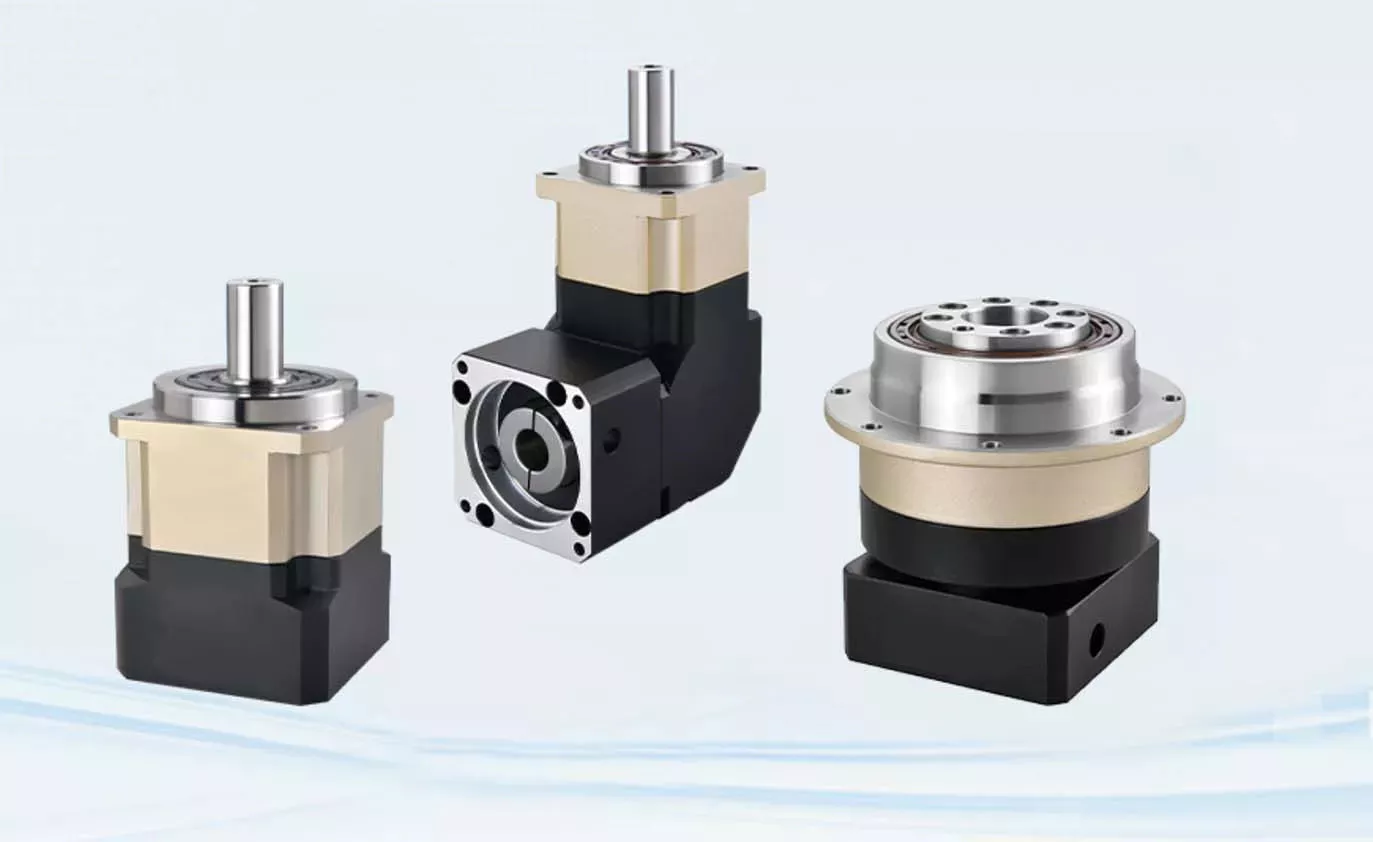
réducteurs planétaires
Planetary gearboxes work on a similar principle to solar systems. They rotate around a center gear called the sun gear, and 2 or more outer gears, called planet gears, are connected by a carrier. These gears then drive an output shaft. The arrangement of planet gears is similar to that of the Milky Way’s ring of planets. This arrangement produces the best torque density and stiffness for a gearbox.
As a compact alternative to normal pinion-and-gear reducers, planetary gearing offers many advantages. These characteristics make planetary gearing ideal for a variety of applications, including compactness and low weight. The efficiency of planetary gearing is enhanced by the fact that 90 percent of the input energy is transferred to the output. The gearboxes also have low noise and high torque density. Additionally, their design offers better load distribution, which contributes to a longer service life.
Planetary gears require lubrication. Because they have a smaller footprint than conventional gears, they dissipate heat well. In fact, lubrication can even lower vibration and noise. It’s also important to keep the gears properly lubricated to prevent the wear and tear that comes with use. The lubrication in planetary gears also helps keep them operating properly and reduces wear and tear on the gears.
A planetary gearbox uses multiple planetary parts to achieve the reduction goal. Each gear has an output shaft and a sun gear located in the center. The ring gear is fixed to the machine, while the sun gear is attached to a clamping system. The outer gears are connected to the carrier, and each planetary gear is held together by rings. This arrangement allows the planetary gear to be symmetrical with respect to the input shaft.
The gear ratio of a planetary gearbox is defined by the sun gear’s number of teeth. As the sun gear gets smaller, the ratio of the gear will increase. The ratio range of planetary gears ranges from 3:1 to 10 to one. Eventually, however, the sun gear becomes too small, and the torque will fall significantly. The higher the ratio, the less torque the gears can transmit. So, planetary gears are often referred to as “planetary” gears.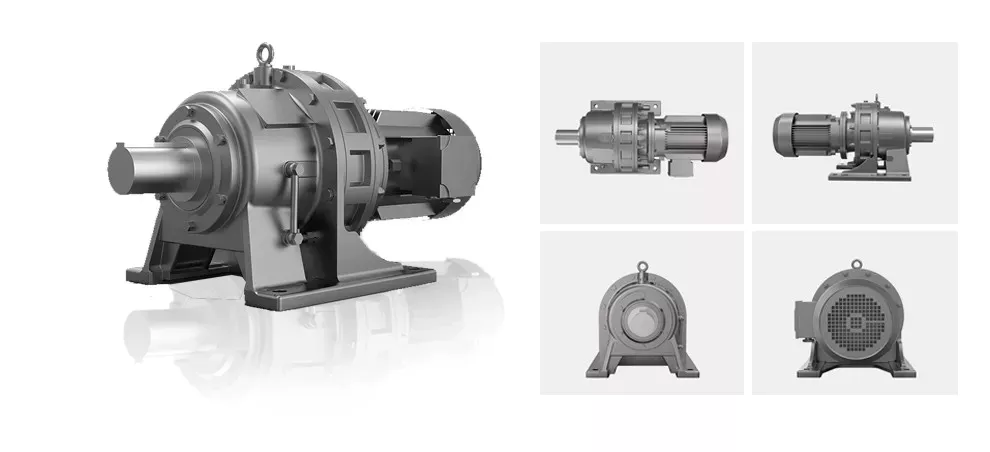
Their design
The basic design of a Planetary Gearbox is quite simple. It consists of 3 interconnecting links, each of which has its own torque. The ring gear is fixed to the frame 0 at O, and the other 2 are fixed to each other at A and B. The ring gear, meanwhile, is attached to the planet arm 3 at O. All 3 parts are connected by joints. A free-body diagram is shown in Figure 9.
During the development process, the design team will divide the power to each individual planet into its respective power paths. This distribution will be based on the meshing condition of all gears in the system. Then, the design team will proceed to determine the loads on individual gear meshes. Using this method, it is possible to determine the loads on individual gear meshes and the shape of ring gear housing.
Planetary Gearboxes are made of 3 gear types. The sun gear is the center, which is connected to the other 2 gears by an internal tooth ring gear. The planet pinions are arranged in a carrier assembly that sets their spacing. The carrier also incorporates an output shaft. The 3 components in a Planetary Gearbox mesh with each other, and they rotate together as one. Depending on the application, they may rotate at different speeds or at different times.
The planetary gearbox’s design is unique. In a planetary gearbox, the input gear rotates around the central gear, while the outer gears are arranged around the sun gear. In addition, the ring gear holds the structure together. A carrier connects the outer gears to the output shaft. Ultimately, this gear system transmits high torque. This type of gearbox is ideal for high-speed operations.
The basic design of a Planetary Gearbox consists of multiple contacts that must mesh with each other. A single planet has an integer number of teeth, while the ring has a non-integer number. The teeth of the planets must mesh with each other, as well as the sun. The tooth counts, as well as the planet spacing, play a role in the design. A planetary gearbox must have an integer number of teeth to function properly.
Applications
In addition to the above-mentioned applications, planetary gearing is also used in machine tools, plastic machinery, derrick and dock cranes, and material handling equipments. Further, its application is found in dredging equipment, road-making machinery, sugar crystallizers, and mill drives. While its versatility and efficiency makes it a desirable choice for many industries, its complicated structure and construction make it a complex component.
Among the many benefits of using a planetary gearbox, the ability to transmit greater torque into a controlled space makes it a popular choice for many industries. Moreover, adding additional planet gears increases the torque density. This makes planetary gears suitable for applications requiring high torque. They are also used in electric screwdrivers and turbine engines. However, they are not used in everything. Some of the more common applications are discussed below:
One of the most important features of planetary gearboxes is their compact footprint. They are able to transmit torque while at the same time reducing noise and vibration. In addition to this, they are able to achieve a high speed without sacrificing high-quality performance. The compact footprint of these gears also allows them to be used in high-speed applications. In some cases, a planetary gearbox has sliding sections. Some of these sections are lubricated with oil, while others may require a synthetic gel. Despite these unique features, planetary gears have become common in many industries.
Planetary gears are composed of 3 components. The sun gear is the input gear, whereas the planet gears are the output gears. They are connected by a carrier. The carrier connects the input shaft with the output shaft. A planetary gearbox can be designed for various requirements, and the type you use will depend on the needs of your application. Its design and performance must meet your application’s needs.
The ratios of planetary gears vary depending on the number of planets. The smaller the sun gear, the greater the ratio. When planetary stages are used alone, the ratio range is 3:1 to 10:1. Higher ratios can be obtained by connecting several planetary stages together in the same ring gear. This method is known as a multi-stage gearbox. However, it can only be used in large gearboxes.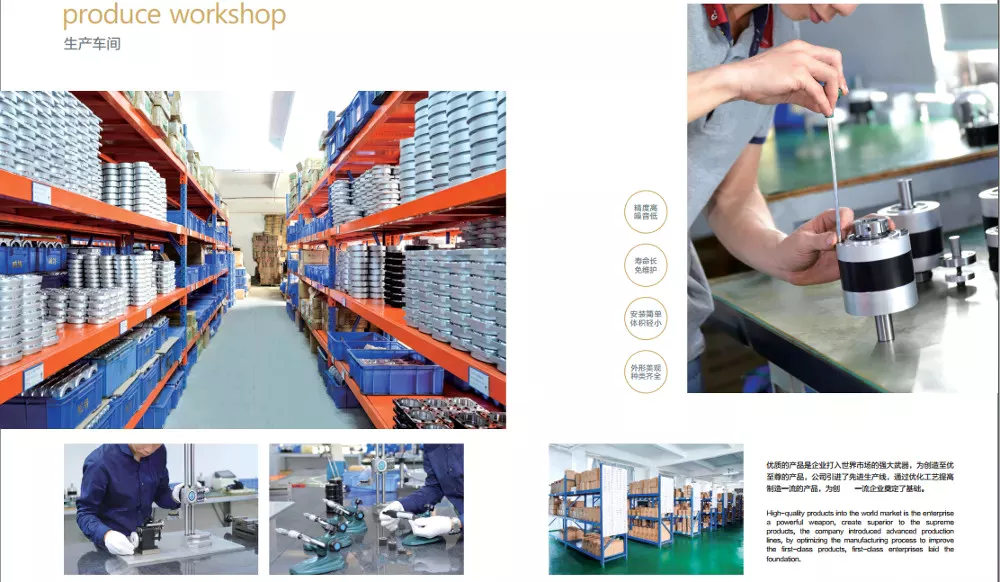
Maintenance
The main component of a planetary gearbox is the planetary gear. It requires regular maintenance and cleaning to remain in top shape. Demand for a longer life span protects all other components of the gearbox. This article will discuss the maintenance and cleaning procedures for planetary gears. After reading this article, you should know how to maintain your planetary gearbox properly. Hopefully, you can enjoy a longer life with your gearbox.
Firstly, it is important to know how to properly lubricate a planetary gearbox. The lubricant is essential as gears that operate at high speeds are subject to high levels of heat and friction. The housing of the planetary gearbox should be constructed to allow the heat to dissipate. The recommended oil is synthetic, and it should be filled between 30 and 50 percent. The lubricant should be changed at least every 6 months or as needed.
While it may seem unnecessary to replace a planetary gearbox, regular servicing will help it last a long time. A regular inspection will identify a problem and the appropriate repairs are needed. Once the planetary gearbox is full, it will plug with gear oil. To avoid this problem, consider getting the unit repaired instead of replacing the gearbox. This can save you a lot of money over a new planetary gearbox.
Proper lubrication is essential for a long life of your planetary gearbox. Oil change frequency should be based on oil temperature and operating speed. Oil at higher temperatures should be changed more frequently because it loses its molecular structure and cannot form a protective film. After this, oil filter maintenance should be performed every few months. Lastly, the gearbox oil needs to be checked regularly and replaced when necessary.