Produktbeschreibung
Hervorragende pulvermetallurgische Teile, metallische Sinterteile
Wir bieten Ihnen verschiedene pulvermetallurgische Teile, sowohl aus Eisen als auch aus Kupfer, in höchster Qualität und zu günstigsten Preisen. Senden Sie uns einfach Ihre Zeichnung oder ein Muster – wir fertigen die Teile nach Ihren Vorgaben. Bei Interesse an unseren Produkten kontaktieren Sie uns bitte. Wir bieten Ihnen beste Qualität und erstklassigen Service. Vielen Dank!
Wie arbeiten wir mit unseren Kunden zusammen?
1. Für einen Designexperten oder ein großes Unternehmen mit eigenem Ingenieurteam: Wir bevorzugen es, von Ihnen ein vollständiges Angebotspaket zu erhalten, das Zeichnung, 3D-Modell, Menge und Bilder enthält;
2. Für den Inhaber eines Start-up-Unternehmens oder einen Anfänger im Ingenieurwesen: Schicken Sie einfach eine Idee ein, die Sie ausprobieren möchten. Sie müssen nicht einmal wissen, was Gießen ist.
3. Unser Vertriebsteam wird Ihnen innerhalb von 24 Stunden antworten, um weitere Details zu bestätigen und Ihnen die voraussichtliche Lieferzeit mitzuteilen.
4. Unser Ingenieurteam wird Ihre Anfrage prüfen und Ihnen innerhalb der nächsten 1 bis 3 Werktage ein Angebot unterbreiten.
5. Bei Bedarf können wir jederzeit ein technisches Kommunikationstreffen zwischen Ihnen und unseren Ingenieuren arrangieren.
| Herkunftsort: | Jangsu, China |
| Typ: | Pulvermetallurgie-Sintern |
| Ersatzteiltyp: | Pulvermetallurgie-Teile |
| Maschinenprüfbericht: | Bereitgestellt |
| Material: | Eisen, Edelstahl, Stahl, Kupfer |
| Wichtigste Verkaufsargumente: | Qualitätssicherung |
| Formtyp: | Wolframstahl |
| Materialstandard: | MPIF 35, DIN 3571, JIS Z 2550 |
| Anwendung: | Kleingeräte für den Haushalt, Türschlösser, Elektrowerkzeuge, Automobile |
| Markenname: | OEM-SERVICE |
| Überzug: | Maßgeschneidert |
| Kundendienst: | Online-Support |
| Verarbeitung: | Pulvermetallurgie, CNC-Bearbeitung |
| Pulvermetallurgie: | Hochfrequenzabschreckung, Ölimmersion |
| Qualitätskontrolle: | 100% Inspektion |
Der Vorteil des pulvermetallurgischen Verfahrens
1. Kosteneffektiv
Die Endprodukte können mittels Pulvermetallurgie verdichtet werden, wodurch die maschinelle Bearbeitung entfällt oder verkürzt werden kann. Dies spart erheblich Material und senkt die Produktionskosten.
2. Komplexe Formen
Die Pulvermetallurgie ermöglicht die Herstellung komplexer Formen direkt aus dem Verdichtungswerkzeug ohne jegliche Nachbearbeitung, wie z. B. Zähne, Keilwellen, Profile, Stirngeometrien usw.
3. Hohe Präzision
Die erreichbaren Toleranzen senkrecht zur Verdichtungsrichtung liegen typischerweise bei IT 8-9 im gesinterten Zustand und können nach dem Kalibrieren auf bis zu IT 5-7 verbessert werden. Zusätzliche Bearbeitungsvorgänge können die Präzision weiter steigern.
4. Selbstschmierung
Die miteinander verbundenen Poren des Materials können mit Öl gefüllt werden, wodurch ein selbstschmierendes Lager entsteht: Das Öl sorgt für eine konstante Schmierung zwischen Lager und Welle, und das System benötigt kein zusätzliches externes Schmiermittel.
5. Grüne Technologie
Der Herstellungsprozess von Sinterbauteilen ist als ökologisch zertifiziert, da der Materialabfall sehr gering ist, das Produkt recycelbar ist und die Energieeffizienz gut ist, weil das Material nicht geschmolzen wird.
Häufig gestellte Fragen
Frage 1: Um welche Zahlungsart handelt es sich?
A: Normalerweise sollten Sie 50% des Gesamtbetrags im Voraus bezahlen. Der Restbetrag ist vor dem Versand zu begleichen.
Frage 2: Wie kann die hohe Qualität gewährleistet werden?
A: 100%-Prüfung. Wir verfügen über hochpräzise Prüfgeräte von Carl Zeiss und eine eigene Prüfabteilung, um sicherzustellen, dass jedes Produkt hinsichtlich Größe, Aussehen und Druckprüfung einwandfrei ist.
Frage 3: Wie lange dauert es, bis ich eine Antwort erhalte?
A: Wir werden uns innerhalb von 12 Stunden so schnell wie möglich bei Ihnen melden.
Frage 4: Wie lange ist Ihre Lieferzeit?
A: In der Regel dauert es 25 bis 35 Tage nach Eingang Ihrer Vorauszahlung. Die genaue Lieferzeit hängt von den bestellten Artikeln und der Bestellmenge ab. Bei Sonderanfertigungen müssen wir zusätzlich 10–15 Tage für die Werkzeug- bzw. Formenherstellung einplanen.
Frage 5: Können Sie nach Mustern oder Zeichnungen fertigen?
A: Ja, wir können nach Ihren Mustern oder technischen Zeichnungen fertigen. Wir können die Formen und Vorrichtungen herstellen.
Frage 6: Wie hoch sind die Werkzeugkosten?
A: Die Werkzeugkosten werden nur einmal bei der ersten Bestellung berechnet, bei allen zukünftigen Bestellungen fallen keine weiteren Kosten an, auch nicht bei Werkzeugreparaturen oder Wartungsarbeiten.
Frage 7: Wie sieht Ihre Stichprobenrichtlinie aus?
A: Wir können Ihnen ein Muster zur Verfügung stellen, sofern wir die entsprechenden Teile auf Lager haben. Die Kosten für das Muster und den Versand trägt jedoch der Kunde.
Frage 8: Wie können wir eine langfristige und gute Geschäftsbeziehung aufbauen?
A: 1. Wir achten auf gute Qualität und wettbewerbsfähige Preise, um den Nutzen für unsere Kunden zu gewährleisten;
2. Wir respektieren jeden Kunden als Freund und pflegen aufrichtige Geschäftsbeziehungen und Freundschaften mit ihnen, unabhängig von ihrer Herkunft.
Planetary Gearbox
This article will explore the design and applications of a planetary gearbox. The reduction ratio of a planetary gearbox is dependent on the number of teeth in the gears. The ratios of planetary gearboxes are usually lower than those of conventional mechanical transmissions, which are mainly used to drive engines and generators. They are often the best choice for heavy-duty applications. The following are some of the advantages of planetary gearboxes.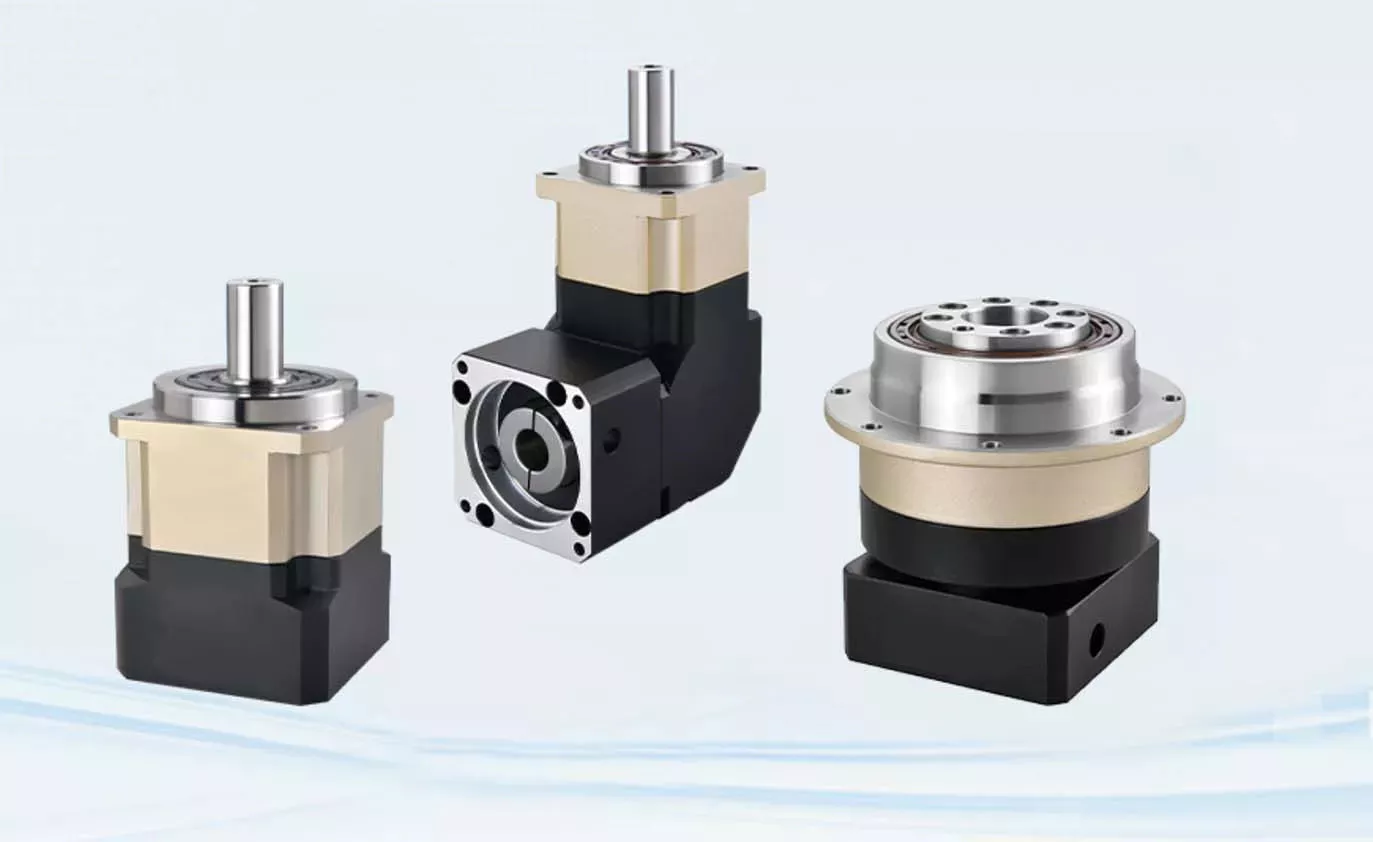
Planetengetriebe
Planetary gearboxes work on a similar principle to solar systems. They rotate around a center gear called the sun gear, and 2 or more outer gears, called planet gears, are connected by a carrier. These gears then drive an output shaft. The arrangement of planet gears is similar to that of the Milky Way’s ring of planets. This arrangement produces the best torque density and stiffness for a gearbox.
As a compact alternative to normal pinion-and-gear reducers, planetary gearing offers many advantages. These characteristics make planetary gearing ideal for a variety of applications, including compactness and low weight. The efficiency of planetary gearing is enhanced by the fact that 90 percent of the input energy is transferred to the output. The gearboxes also have low noise and high torque density. Additionally, their design offers better load distribution, which contributes to a longer service life.
Planetary gears require lubrication. Because they have a smaller footprint than conventional gears, they dissipate heat well. In fact, lubrication can even lower vibration and noise. It’s also important to keep the gears properly lubricated to prevent the wear and tear that comes with use. The lubrication in planetary gears also helps keep them operating properly and reduces wear and tear on the gears.
A planetary gearbox uses multiple planetary parts to achieve the reduction goal. Each gear has an output shaft and a sun gear located in the center. The ring gear is fixed to the machine, while the sun gear is attached to a clamping system. The outer gears are connected to the carrier, and each planetary gear is held together by rings. This arrangement allows the planetary gear to be symmetrical with respect to the input shaft.
The gear ratio of a planetary gearbox is defined by the sun gear’s number of teeth. As the sun gear gets smaller, the ratio of the gear will increase. The ratio range of planetary gears ranges from 3:1 to 10 to one. Eventually, however, the sun gear becomes too small, and the torque will fall significantly. The higher the ratio, the less torque the gears can transmit. So, planetary gears are often referred to as “planetary” gears.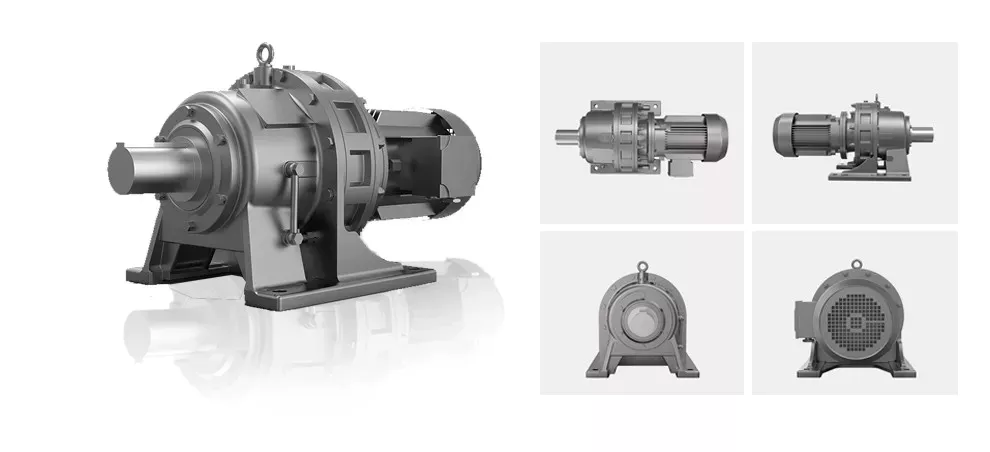
Their design
The basic design of a Planetary Gearbox is quite simple. It consists of 3 interconnecting links, each of which has its own torque. The ring gear is fixed to the frame 0 at O, and the other 2 are fixed to each other at A and B. The ring gear, meanwhile, is attached to the planet arm 3 at O. All 3 parts are connected by joints. A free-body diagram is shown in Figure 9.
During the development process, the design team will divide the power to each individual planet into its respective power paths. This distribution will be based on the meshing condition of all gears in the system. Then, the design team will proceed to determine the loads on individual gear meshes. Using this method, it is possible to determine the loads on individual gear meshes and the shape of ring gear housing.
Planetary Gearboxes are made of 3 gear types. The sun gear is the center, which is connected to the other 2 gears by an internal tooth ring gear. The planet pinions are arranged in a carrier assembly that sets their spacing. The carrier also incorporates an output shaft. The 3 components in a Planetary Gearbox mesh with each other, and they rotate together as one. Depending on the application, they may rotate at different speeds or at different times.
The planetary gearbox’s design is unique. In a planetary gearbox, the input gear rotates around the central gear, while the outer gears are arranged around the sun gear. In addition, the ring gear holds the structure together. A carrier connects the outer gears to the output shaft. Ultimately, this gear system transmits high torque. This type of gearbox is ideal for high-speed operations.
The basic design of a Planetary Gearbox consists of multiple contacts that must mesh with each other. A single planet has an integer number of teeth, while the ring has a non-integer number. The teeth of the planets must mesh with each other, as well as the sun. The tooth counts, as well as the planet spacing, play a role in the design. A planetary gearbox must have an integer number of teeth to function properly.
Anwendungen
In addition to the above-mentioned applications, planetary gearing is also used in machine tools, plastic machinery, derrick and dock cranes, and material handling equipments. Further, its application is found in dredging equipment, road-making machinery, sugar crystallizers, and mill drives. While its versatility and efficiency makes it a desirable choice for many industries, its complicated structure and construction make it a complex component.
Among the many benefits of using a planetary gearbox, the ability to transmit greater torque into a controlled space makes it a popular choice for many industries. Moreover, adding additional planet gears increases the torque density. This makes planetary gears suitable for applications requiring high torque. They are also used in electric screwdrivers and turbine engines. However, they are not used in everything. Some of the more common applications are discussed below:
One of the most important features of planetary gearboxes is their compact footprint. They are able to transmit torque while at the same time reducing noise and vibration. In addition to this, they are able to achieve a high speed without sacrificing high-quality performance. The compact footprint of these gears also allows them to be used in high-speed applications. In some cases, a planetary gearbox has sliding sections. Some of these sections are lubricated with oil, while others may require a synthetic gel. Despite these unique features, planetary gears have become common in many industries.
Planetary gears are composed of 3 components. The sun gear is the input gear, whereas the planet gears are the output gears. They are connected by a carrier. The carrier connects the input shaft with the output shaft. A planetary gearbox can be designed for various requirements, and the type you use will depend on the needs of your application. Its design and performance must meet your application’s needs.
The ratios of planetary gears vary depending on the number of planets. The smaller the sun gear, the greater the ratio. When planetary stages are used alone, the ratio range is 3:1 to 10:1. Higher ratios can be obtained by connecting several planetary stages together in the same ring gear. This method is known as a multi-stage gearbox. However, it can only be used in large gearboxes.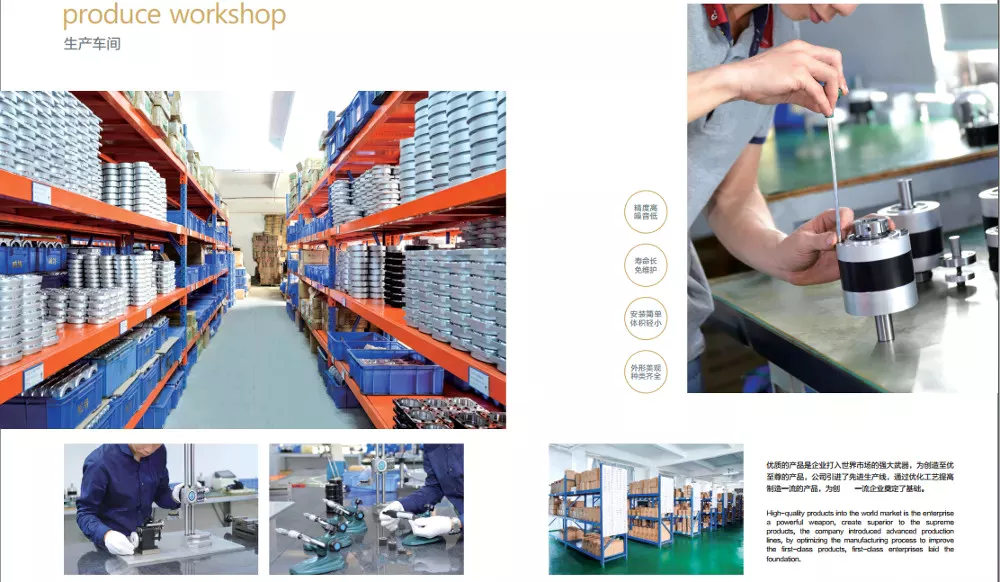
Maintenance
The main component of a planetary gearbox is the planetary gear. It requires regular maintenance and cleaning to remain in top shape. Demand for a longer life span protects all other components of the gearbox. This article will discuss the maintenance and cleaning procedures for planetary gears. After reading this article, you should know how to maintain your planetary gearbox properly. Hopefully, you can enjoy a longer life with your gearbox.
Firstly, it is important to know how to properly lubricate a planetary gearbox. The lubricant is essential as gears that operate at high speeds are subject to high levels of heat and friction. The housing of the planetary gearbox should be constructed to allow the heat to dissipate. The recommended oil is synthetic, and it should be filled between 30 and 50 percent. The lubricant should be changed at least every 6 months or as needed.
While it may seem unnecessary to replace a planetary gearbox, regular servicing will help it last a long time. A regular inspection will identify a problem and the appropriate repairs are needed. Once the planetary gearbox is full, it will plug with gear oil. To avoid this problem, consider getting the unit repaired instead of replacing the gearbox. This can save you a lot of money over a new planetary gearbox.
Proper lubrication is essential for a long life of your planetary gearbox. Oil change frequency should be based on oil temperature and operating speed. Oil at higher temperatures should be changed more frequently because it loses its molecular structure and cannot form a protective film. After this, oil filter maintenance should be performed every few months. Lastly, the gearbox oil needs to be checked regularly and replaced when necessary.