Opis produktu
Opis produktu
The NDV140 series planetary gearboxes are designed and machined as a single unit with special tapered roller bearings to provide high radial load, high torque, ultra-precision, and small size. The ND series uses in highly rigid industries such as fiber optic laser equipment, floor track equipment, robot seventh axis, Parallel robots (spider hand) machine tools, and rotating arms.
Product Name: High Precision Planetary Reducer
Product Series: NDV140 Series
Product features: high torque, high load, ultra-precision, small size
Product Description:
Integrated design concept with high-strength bearings ensure the product itself is durable and efficient
A variety of output ideas such as shaft output, flange and gear are available.
1 arc minute ≤ backlash ≤ 3 arc minutes
Reduction ratios ranging from 3 to 100
Frame design: increases torque and optimizes power transmission
Optimised selection of oil seals: reduces friction and laminate transmission efficiency
Protection class IP65
Warranty: 2 years
Our Advantages
High torque
High load
ultra-precision
Small size
Detailed Photos
Parametry produktu
| Segment number | Single segment | ||||
| Stosunek | i | 4 | 5 | 7 | 10 |
| Rated output torque | Nm | 530 | 610 | 520 | 420 |
| Emergency stop torque | Nm | Three times of Maximum Output Torque | |||
| Rated input speed | Rpm | 3000 | |||
| Max input speed | Rpm | 6000 | |||
| Ultraprecise backlash | minut łukowych | ≤1 | |||
| Precision backlash | minut łukowych | ≤3 | |||
| Standard backlash | minut łukowych | ≤5 | |||
| Torsional rigidity | Nm/minutę łuku | 151 | |||
| Max.bending moment | Nm | 1310 | |||
| Max.axial force | N | 8530 | |||
| Service life | hr | 30000(15000 under continuous operation) | |||
| Efficiency | % | ≥97% | |||
| Waga | kg | 11.9 | |||
| Operating Temperature | ºC | -10ºC~+90ºC | |||
| Smarowanie | Synthetic grease | ||||
| Protection class | IP64 | ||||
| Mounting Position | All directions | ||||
| Noise level(N1=3000rpm,non-loaded) | dB(A) | ≤65 | |||
| Rotary inertia | Kg·cm² | 7.54 | 7.42 | 7.14 | 7.03 |
Applicable Industries
Packaging Machinery Mechanical Hand Textile Machinery
Non Standard automation Machine Tool Printing Equipment
Certyfikaty
Profil firmy
DESBOER (HangZhou) Transmission Technology Co., Ltd. is a subsidiary of DESBOER (China), which is committed to the design, development, customized production and sales of high precision planetary reducer as 1 of the technology company. Our company has over 10 years of design, production and sales experience, the main products are the high precision planetary reducer, gear, rack, etc., with high quality, short delivery period, high cost performance and other advantages to better serve the demand of global customers. It is worth noting that we remove the intermediate link sale from the factory directly to customers, so that you can get the most ideal price and also get our best quality service simultaneously.
About Research
In order to strengthen the advantages of products in the international market, the head company in Kyoto, Japan to established KABUSHIKIKAISYA KYOEKI, mainly engaged in the development of DESBOER high precision planetary reducer, high precision of transmission components such as the development work, to provide the most advanced design technology and the most high-quality products for the international market.
| Aplikacja: | Motor, Machinery, Marine, Agricultural Machinery, CNC Machine |
|---|---|
| Function: | Change Drive Torque, Speed Changing, Speed Reduction |
| Układ: | Plantery Type |
| Twardość: | Utwardzona powierzchnia zęba |
| Instalacja: | All Directions |
| Krok: | Pojedynczy krok |
| Personalizacja: |
Dostępny
| Spersonalizowane żądanie |
|---|
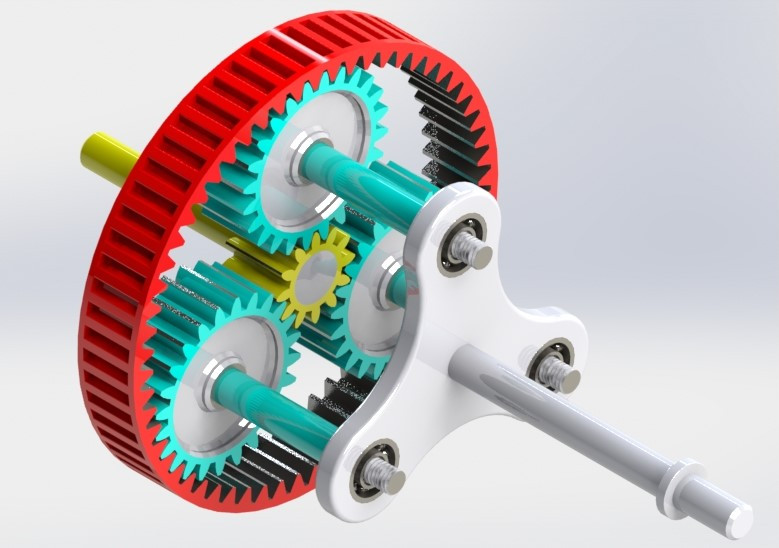
How do planetary gears handle changes in speed and torque distribution?
Planetary gears are capable of effectively handling changes in speed and torque distribution due to their unique design and configuration. Let’s explore how planetary gears handle these changes:
- Speed Changes:
Planetary gears can handle speed changes by utilizing the different gear ratios they offer. By adjusting the sizes and numbers of teeth on the sun gear, planet gears, and ring gear, different gear ratios can be achieved. When the input speed is applied to the sun gear, it gets transmitted to the planet gears, resulting in a specific output speed. By changing the gear ratio, the output speed can be adjusted accordingly. This ability to vary the gear ratio allows planetary gears to adapt to different speed requirements in mechanical systems.
- Torque Distribution:
Planetary gears excel in distributing torque across multiple gear teeth, ensuring efficient torque transmission and load sharing. The planet gears are meshed with both the sun gear and the ring gear, enabling torque to be transmitted through multiple contact points simultaneously. This distributed torque distribution helps in reducing stress on individual gear teeth and enhances the overall torque-carrying capacity of the gear system. The load is shared among the planet gears, preventing excessive wear and minimizing the risk of gear failure.
- Wzmocnienie momentu obrotowego:
Planetary gears can also handle torque amplification, allowing for increased torque output compared to the input torque. By fixing the ring gear and inputting power to the sun gear, the planet gears rotate and contribute to multiplying the torque. The arrangement of multiple gear sets in a compact design enables torque amplification, making planetary gears suitable for applications that require high torque output while maintaining a smaller physical size.
- Load Balancing:
Another aspect of torque distribution in planetary gears is load balancing. The planet gears distribute the load across multiple gear teeth, reducing the concentration of forces on individual teeth. This load balancing capability results in improved gear system durability and longevity. It also helps in minimizing vibration, noise, and wear, ensuring smoother and more reliable operation.
- Flexible Configuration:
Planetary gears offer flexibility in their configuration, allowing for the accommodation of changes in speed and torque distribution. The number of planet gears, the size of the gears, and their arrangement can be adjusted to meet specific application requirements. This flexibility enables planetary gears to handle a wide range of speed and torque variations, making them adaptable to different mechanical setups.
In summary, planetary gears handle changes in speed and torque distribution through their ability to adjust gear ratios, distribute torque across multiple gear teeth, amplify torque, balance loads, and accommodate flexible configurations. These characteristics make planetary gears suitable for applications that require precise control over speed and torque, efficient power transmission, and reliable performance.
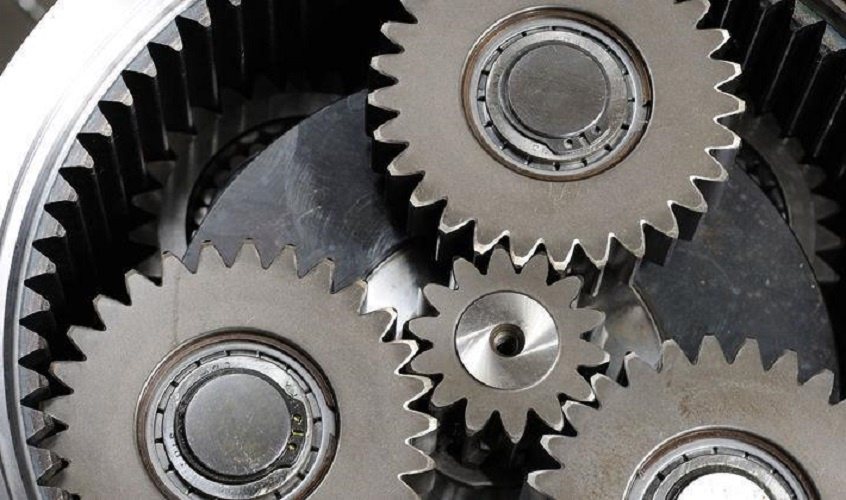
Can planetary gears be used in robotics and automation?
Planetary gears are commonly used in robotics and automation due to their numerous advantages and suitability for various applications. Let’s explore how planetary gears are utilized in robotics and automation:
- Compact Size and High Power Density:
Planetary gears offer a high power density, meaning they can transmit significant torque in a compact size. This characteristic is particularly valuable in robotics and automation systems, where space is often limited. The compactness of planetary gears allows for efficient integration into robotic joints, gearboxes, and other motion control components.
- Precision and Repeatability:
Planetary gears provide high precision and repeatability, making them suitable for precise positioning and motion control tasks in robotics and automation. The gear design and arrangement contribute to minimal backlash and accurate torque transmission, ensuring precise and predictable movements. This precision is essential in applications such as robotic arms, CNC machines, and pick-and-place systems.
- Speed Reduction and Torque Amplification:
Planetary gears offer the capability of speed reduction and torque amplification, allowing robots to handle varying loads and achieve different levels of speed and force. By utilizing the gear ratios and multiple gear stages, planetary gears enable robots to perform tasks that require both high torque and precise movements, such as lifting heavy objects or performing delicate assembly operations.
- Efficiency and Energy Savings:
Planetary gears are known for their high efficiency in power transmission. The gear design minimizes friction and ensures efficient torque transfer, resulting in reduced energy consumption. In robotics and automation, where energy efficiency is often a concern, the use of planetary gears can contribute to overall energy savings and longer battery life in battery-powered systems.
- Reliability and Durability:
Planetary gears are designed to be robust and durable, capable of withstanding demanding operating conditions. They can handle high loads, provide long service life, and resist wear and fatigue. These characteristics are crucial in robotics and automation, where the gears are subjected to repetitive and continuous motion. The reliability and durability of planetary gears contribute to the overall performance and longevity of robotic systems.
- Versatility and Customization:
Planetary gears offer versatility and customization options to meet specific requirements in robotics and automation. They can be combined with other mechanical components such as motors, encoders, and sensors to create tailored motion control systems. The ability to select different gear ratios, sizes, and configurations allows for the optimization of robotic designs for specific applications and performance criteria.
In summary, planetary gears are widely used in robotics and automation due to their compact size, high power density, precision, repeatability, speed reduction, torque amplification, efficiency, reliability, durability, versatility, and customization options. These qualities make planetary gears an excellent choice for various robotic applications, including industrial automation, collaborative robots, robotic prosthetics, unmanned vehicles, and many others.
Czy potrafisz opisać rolę kół zębatych słonecznych, kół planetarnych i kół pierścieniowych w układach planetarnych?
W układzie przekładni planetarnej każdy element – koło słoneczne, koła obiegowe i koło pierścieniowe – odgrywa kluczową rolę w ogólnym działaniu i funkcjonalności. Przyjrzyjmy się roli tych kół:
- Sprzęt słoneczny:
Koło słoneczne jest centralnym elementem układu przekładni planetarnej. Zazwyczaj znajduje się w środku i jest napędzane przez źródło zasilania, takie jak silnik elektryczny. Koło słoneczne odbiera moc wejściową i przekazuje ją do pozostałych kół zębatych w układzie. Obracając się, koło słoneczne napędza obroty kół planetarnych, które z kolei przyczyniają się do ogólnego działania przekładni. Rozmiar i liczba zębów koła słonecznego determinują przełożenie i charakterystykę momentu obrotowego układu.
- Przekładnie planetarne:
Przekładnie planetarne to koła zębate otaczające koło słoneczne w układzie przekładni planetarnej. Zazwyczaj są mniejsze w porównaniu z kołem słonecznym i są połączone z jarzmem lub ramieniem. Przekładnie planetarne zazębiają się zarówno z kołem słonecznym, jak i z kołem pierścieniowym. Obracając się, koło słoneczne napędza obrót kół planetarnych. Przekładnie planetarne wykonują zarówno ruch obrotowy, jak i orbitalny. Obracając się wokół własnej osi, krążą również wokół koła słonecznego. To połączenie ruchu obrotowego i orbitalnego pozwala przekładniom planetarnym przenosić moment obrotowy i przyczyniać się do ogólnej redukcji lub wzmocnienia przełożenia. Układ i liczba przekładni planetarnych mogą się różnić w zależności od konkretnej konstrukcji i wymagań układu.
- Koło zębate:
Koło koronowe jest najbardziej zewnętrznym kołem zębatym w układzie przekładni planetarnej. Posiada wewnętrzne zęby, które zazębiają się z kołami planetarnymi. Koło koronowe pozostaje nieruchome, podczas gdy koło słoneczne i koła planetarne obracają się. Interakcja między kołami planetarnymi a kołem koronowym umożliwia układowi przekładni redukcję lub wzmocnienie przełożenia. Rozmiar i liczba zębów koła koronowego również wpływają na przełożenie i charakterystykę momentu obrotowego układu.
Podsumowując, koło słoneczne pełni funkcję głównego napędu, odbierając moc wejściową i przekazując ją na pozostałe koła zębate. Koła planetarne obracają się wokół koła słonecznego, przyczyniając się do przeniesienia momentu obrotowego i funkcjonalności przekładni. Koło koronowe pozostaje nieruchome i zazębia się z kołami planetarnymi, umożliwiając redukcję lub wzmocnienie przełożenia. Razem koła te harmonijnie współpracują, aby uzyskać pożądane przełożenia, przeniesienie momentu obrotowego i ogólną wydajność układów przekładni planetarnych.


editor by CX 2023-11-03