Mô tả sản phẩm
Mô tả sản phẩm
The NDV140 series planetary gearboxes are designed and machined as a single unit with special tapered roller bearings to provide high radial load, high torque, ultra-precision, and small size. The ND series uses in highly rigid industries such as fiber optic laser equipment, floor track equipment, robot seventh axis, Parallel robots (spider hand) machine tools, and rotating arms.
Product Name: High Precision Planetary Reducer
Product Series: NDV140 Series
Product features: high torque, high load, ultra-precision, small size
Product Description:
Integrated design concept with high-strength bearings ensure the product itself is durable and efficient
A variety of output ideas such as shaft output, flange and gear are available.
1 arc minute ≤ backlash ≤ 3 arc minutes
Reduction ratios ranging from 3 to 100
Frame design: increases torque and optimizes power transmission
Optimised selection of oil seals: reduces friction and laminate transmission efficiency
Protection class IP65
Warranty: 2 years
Ưu điểm của chúng tôi
High torque
High load
ultra-precision
Small size
Ảnh chi tiết
Thông số sản phẩm
| Segment number | Single segment | ||||
| Tỷ lệ | i | 4 | 5 | 7 | 10 |
| Rated output torque | Nm | 530 | 610 | 520 | 420 |
| Emergency stop torque | Nm | Three times of Maximum Output Torque | |||
| Rated input speed | Rpm | 3000 | |||
| Max input speed | Rpm | 6000 | |||
| Ultraprecise backlash | arcmin | ≤1 | |||
| Precision backlash | arcmin | ≤3 | |||
| Standard backlash | arcmin | ≤5 | |||
| Torsional rigidity | Nm/arcmin | 151 | |||
| Max.bending moment | Nm | 1310 | |||
| Max.axial force | N | 8530 | |||
| Service life | hr | 30000(15000 under continuous operation) | |||
| Efficiency | % | ≥97% | |||
| Weight | kg | 11.9 | |||
| Operating Temperature | ºC | -10ºC~+90ºC | |||
| Bôi trơn | Synthetic grease | ||||
| Protection class | IP64 | ||||
| Mounting Position | All directions | ||||
| Noise level(N1=3000rpm,non-loaded) | dB(A) | ≤65 | |||
| Rotary inertia | Kg·cm² | 7.54 | 7.42 | 7.14 | 7.03 |
Applicable Industries
Packaging Machinery Mechanical Hand Textile Machinery
Non Standard automation Machine Tool Printing Equipment
Chứng chỉ
Hồ sơ công ty
DESBOER (HangZhou) Transmission Technology Co., Ltd. is a subsidiary of DESBOER (China), which is committed to the design, development, customized production and sales of high precision planetary reducer as 1 of the technology company. Our company has over 10 years of design, production and sales experience, the main products are the high precision planetary reducer, gear, rack, etc., with high quality, short delivery period, high cost performance and other advantages to better serve the demand of global customers. It is worth noting that we remove the intermediate link sale from the factory directly to customers, so that you can get the most ideal price and also get our best quality service simultaneously.
About Research
In order to strengthen the advantages of products in the international market, the head company in Kyoto, Japan to established KABUSHIKIKAISYA KYOEKI, mainly engaged in the development of DESBOER high precision planetary reducer, high precision of transmission components such as the development work, to provide the most advanced design technology and the most high-quality products for the international market.
| Ứng dụng: | Motor, Machinery, Marine, Agricultural Machinery, CNC Machine |
|---|---|
| Function: | Change Drive Torque, Speed Changing, Speed Reduction |
| Layout: | Plantery Type |
| Độ cứng: | Bề mặt răng được tôi cứng |
| Cài đặt: | All Directions |
| Step: | Single-Step |
| Tùy chỉnh: |
Có sẵn
| Yêu cầu tùy chỉnh |
|---|
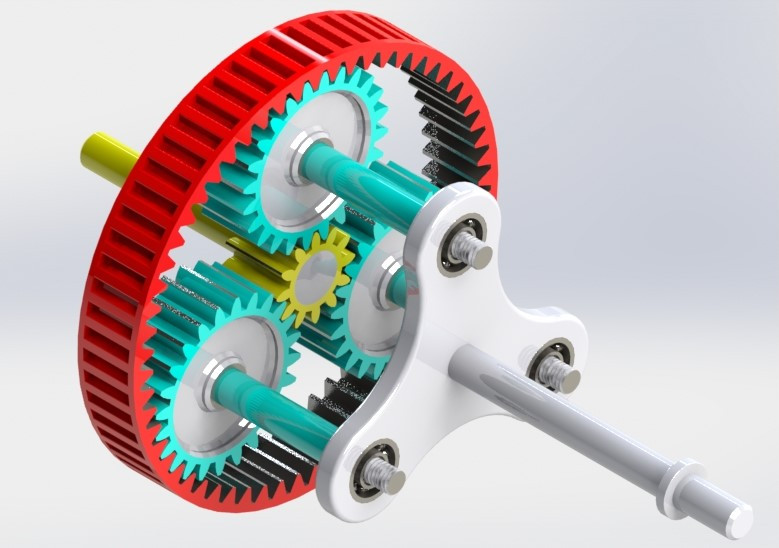
How do planetary gears handle changes in speed and torque distribution?
Planetary gears are capable of effectively handling changes in speed and torque distribution due to their unique design and configuration. Let’s explore how planetary gears handle these changes:
- Speed Changes:
Planetary gears can handle speed changes by utilizing the different gear ratios they offer. By adjusting the sizes and numbers of teeth on the sun gear, planet gears, and ring gear, different gear ratios can be achieved. When the input speed is applied to the sun gear, it gets transmitted to the planet gears, resulting in a specific output speed. By changing the gear ratio, the output speed can be adjusted accordingly. This ability to vary the gear ratio allows planetary gears to adapt to different speed requirements in mechanical systems.
- Torque Distribution:
Planetary gears excel in distributing torque across multiple gear teeth, ensuring efficient torque transmission and load sharing. The planet gears are meshed with both the sun gear and the ring gear, enabling torque to be transmitted through multiple contact points simultaneously. This distributed torque distribution helps in reducing stress on individual gear teeth and enhances the overall torque-carrying capacity of the gear system. The load is shared among the planet gears, preventing excessive wear and minimizing the risk of gear failure.
- Torque Amplification:
Planetary gears can also handle torque amplification, allowing for increased torque output compared to the input torque. By fixing the ring gear and inputting power to the sun gear, the planet gears rotate and contribute to multiplying the torque. The arrangement of multiple gear sets in a compact design enables torque amplification, making planetary gears suitable for applications that require high torque output while maintaining a smaller physical size.
- Load Balancing:
Another aspect of torque distribution in planetary gears is load balancing. The planet gears distribute the load across multiple gear teeth, reducing the concentration of forces on individual teeth. This load balancing capability results in improved gear system durability and longevity. It also helps in minimizing vibration, noise, and wear, ensuring smoother and more reliable operation.
- Flexible Configuration:
Planetary gears offer flexibility in their configuration, allowing for the accommodation of changes in speed and torque distribution. The number of planet gears, the size of the gears, and their arrangement can be adjusted to meet specific application requirements. This flexibility enables planetary gears to handle a wide range of speed and torque variations, making them adaptable to different mechanical setups.
In summary, planetary gears handle changes in speed and torque distribution through their ability to adjust gear ratios, distribute torque across multiple gear teeth, amplify torque, balance loads, and accommodate flexible configurations. These characteristics make planetary gears suitable for applications that require precise control over speed and torque, efficient power transmission, and reliable performance.
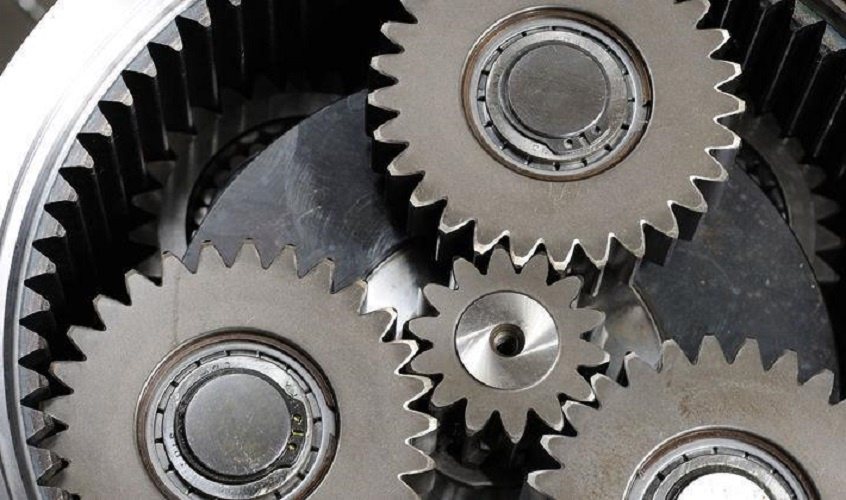
Can planetary gears be used in robotics and automation?
Planetary gears are commonly used in robotics and automation due to their numerous advantages and suitability for various applications. Let’s explore how planetary gears are utilized in robotics and automation:
- Compact Size and High Power Density:
Planetary gears offer a high power density, meaning they can transmit significant torque in a compact size. This characteristic is particularly valuable in robotics and automation systems, where space is often limited. The compactness of planetary gears allows for efficient integration into robotic joints, gearboxes, and other motion control components.
- Precision and Repeatability:
Planetary gears provide high precision and repeatability, making them suitable for precise positioning and motion control tasks in robotics and automation. The gear design and arrangement contribute to minimal backlash and accurate torque transmission, ensuring precise and predictable movements. This precision is essential in applications such as robotic arms, CNC machines, and pick-and-place systems.
- Speed Reduction and Torque Amplification:
Planetary gears offer the capability of speed reduction and torque amplification, allowing robots to handle varying loads and achieve different levels of speed and force. By utilizing the gear ratios and multiple gear stages, planetary gears enable robots to perform tasks that require both high torque and precise movements, such as lifting heavy objects or performing delicate assembly operations.
- Efficiency and Energy Savings:
Planetary gears are known for their high efficiency in power transmission. The gear design minimizes friction and ensures efficient torque transfer, resulting in reduced energy consumption. In robotics and automation, where energy efficiency is often a concern, the use of planetary gears can contribute to overall energy savings and longer battery life in battery-powered systems.
- Reliability and Durability:
Planetary gears are designed to be robust and durable, capable of withstanding demanding operating conditions. They can handle high loads, provide long service life, and resist wear and fatigue. These characteristics are crucial in robotics and automation, where the gears are subjected to repetitive and continuous motion. The reliability and durability of planetary gears contribute to the overall performance and longevity of robotic systems.
- Versatility and Customization:
Planetary gears offer versatility and customization options to meet specific requirements in robotics and automation. They can be combined with other mechanical components such as motors, encoders, and sensors to create tailored motion control systems. The ability to select different gear ratios, sizes, and configurations allows for the optimization of robotic designs for specific applications and performance criteria.
In summary, planetary gears are widely used in robotics and automation due to their compact size, high power density, precision, repeatability, speed reduction, torque amplification, efficiency, reliability, durability, versatility, and customization options. These qualities make planetary gears an excellent choice for various robotic applications, including industrial automation, collaborative robots, robotic prosthetics, unmanned vehicles, and many others.
Bạn có thể mô tả vai trò của bánh răng mặt trời, bánh răng hành tinh và bánh răng vành đai trong hệ thống hành tinh không?
Trong hệ thống truyền động hành tinh, mỗi thành phần—bánh răng mặt trời, bánh răng hành tinh và bánh răng vành—đều đóng vai trò quan trọng trong hoạt động và chức năng tổng thể. Hãy cùng tìm hiểu vai trò của các bánh răng này:
- Đồ dùng chống nắng:
Bánh răng mặt trời là một bộ phận trung tâm trong hệ thống truyền động hành tinh. Nó thường được đặt ở trung tâm và được dẫn động bởi một nguồn đầu vào như động cơ điện hoặc máy phát điện. Bánh răng mặt trời nhận công suất đầu vào và truyền nó đến các bánh răng khác trong hệ thống. Khi bánh răng mặt trời quay, nó dẫn động sự quay của các bánh răng hành tinh, từ đó góp phần vào hoạt động tổng thể của hệ thống truyền động. Kích thước và số răng trên bánh răng mặt trời quyết định tỷ số truyền và đặc tính mô-men xoắn của hệ thống.
- Bánh răng hành tinh:
Các bánh răng hành tinh là những bánh răng bao quanh bánh răng trung tâm trong hệ thống truyền động hành tinh. Chúng thường có kích thước nhỏ hơn so với bánh răng trung tâm và được kết nối với một trục hoặc tay đòn. Các bánh răng hành tinh ăn khớp với cả bánh răng trung tâm và bánh răng vành. Khi bánh răng trung tâm quay, nó truyền động cho sự quay của các bánh răng hành tinh. Các bánh răng hành tinh thể hiện cả chuyển động quay và chuyển động quỹ đạo. Trong khi chúng quay quanh trục của chính mình, chúng cũng quay quanh bánh răng trung tâm. Sự kết hợp giữa chuyển động quay và chuyển động quỹ đạo này cho phép các bánh răng hành tinh truyền mô-men xoắn và góp phần vào sự giảm hoặc tăng tỷ số truyền tổng thể. Cách bố trí và số lượng bánh răng hành tinh có thể thay đổi tùy thuộc vào thiết kế và yêu cầu cụ thể của hệ thống.
- Bánh răng vành:
Vành đai là bánh răng ngoài cùng trong hệ truyền động hành tinh. Nó có các răng bên trong ăn khớp với các bánh răng hành tinh. Vành đai được giữ cố định trong khi bánh răng mặt trời và các bánh răng hành tinh quay. Sự tương tác giữa các bánh răng hành tinh và vành đai cho phép hệ thống truyền động đạt được sự giảm hoặc tăng tỷ số truyền. Kích thước và số răng trên vành đai cũng ảnh hưởng đến tỷ số truyền và đặc tính mô-men xoắn của hệ thống.
Tóm lại, bánh răng mặt trời đóng vai trò là bộ truyền động chính, nhận công suất đầu vào và truyền đến các bánh răng khác. Các bánh răng hành tinh quay và chuyển động quanh bánh răng mặt trời, góp phần truyền mô-men xoắn và chức năng của hộp số. Bánh răng vành cố định và ăn khớp với các bánh răng hành tinh, cho phép giảm hoặc tăng tỷ số truyền. Cùng nhau, các bánh răng này hoạt động hài hòa để đạt được tỷ số truyền mong muốn, truyền mô-men xoắn và hoạt động tổng thể của hệ thống bánh răng hành tinh.


editor by CX 2023-11-03