Produktbeskrivelse
Produktbeskrivelse
The NDV140 series planetary gearboxes are designed and machined as a single unit with special tapered roller bearings to provide high radial load, high torque, ultra-precision, and small size. The ND series uses in highly rigid industries such as fiber optic laser equipment, floor track equipment, robot seventh axis, Parallel robots (spider hand) machine tools, and rotating arms.
Product Name: High Precision Planetary Reducer
Product Series: NDV140 Series
Product features: high torque, high load, ultra-precision, small size
Product Description:
Integrated design concept with high-strength bearings ensure the product itself is durable and efficient
A variety of output ideas such as shaft output, flange and gear are available.
1 arc minute ≤ backlash ≤ 3 arc minutes
Reduction ratios ranging from 3 to 100
Frame design: increases torque and optimizes power transmission
Optimised selection of oil seals: reduces friction and laminate transmission efficiency
Protection class IP65
Warranty: 2 years
Våre fordeler
High torque
High load
ultra-precision
Small size
Detaljerte bilder
Produktparametere
| Segment number | Single segment | ||||
| Forhold | i | 4 | 5 | 7 | 10 |
| Rated output torque | Nm | 530 | 610 | 520 | 420 |
| Emergency stop torque | Nm | Three times of Maximum Output Torque | |||
| Rated input speed | Rpm | 3000 | |||
| Max input speed | Rpm | 6000 | |||
| Ultraprecise backlash | arcmin | ≤1 | |||
| Precision backlash | arcmin | ≤3 | |||
| Standard backlash | arcmin | ≤5 | |||
| Torsional rigidity | Nm/arcmin | 151 | |||
| Max.bending moment | Nm | 1310 | |||
| Max.axial force | N | 8530 | |||
| Service life | hr | 30000(15000 under continuous operation) | |||
| Efficiency | % | ≥97% | |||
| Weight | kg | 11.9 | |||
| Operating Temperature | ºC | -10ºC~+90ºC | |||
| Smøring | Synthetic grease | ||||
| Protection class | IP64 | ||||
| Mounting Position | All directions | ||||
| Noise level(N1=3000rpm,non-loaded) | dB(A) | ≤65 | |||
| Rotary inertia | Kg·cm² | 7.54 | 7.42 | 7.14 | 7.03 |
Applicable Industries
Packaging Machinery Mechanical Hand Textile Machinery
Non Standard automation Machine Tool Printing Equipment
Sertifiseringer
Firmaprofil
DESBOER (HangZhou) Transmission Technology Co., Ltd. is a subsidiary of DESBOER (China), which is committed to the design, development, customized production and sales of high precision planetary reducer as 1 of the technology company. Our company has over 10 years of design, production and sales experience, the main products are the high precision planetary reducer, gear, rack, etc., with high quality, short delivery period, high cost performance and other advantages to better serve the demand of global customers. It is worth noting that we remove the intermediate link sale from the factory directly to customers, so that you can get the most ideal price and also get our best quality service simultaneously.
About Research
In order to strengthen the advantages of products in the international market, the head company in Kyoto, Japan to established KABUSHIKIKAISYA KYOEKI, mainly engaged in the development of DESBOER high precision planetary reducer, high precision of transmission components such as the development work, to provide the most advanced design technology and the most high-quality products for the international market.
| Søknad: | Motor, Machinery, Marine, Agricultural Machinery, CNC Machine |
|---|---|
| Function: | Change Drive Torque, Speed Changing, Speed Reduction |
| Oppsett: | Plantery Type |
| Hardhet: | Herdet tannoverflate |
| Installasjon: | All Directions |
| Skritt: | Enkelt-trinn |
| Tilpasning: |
Tilgjengelig
| Tilpasset forespørsel |
|---|
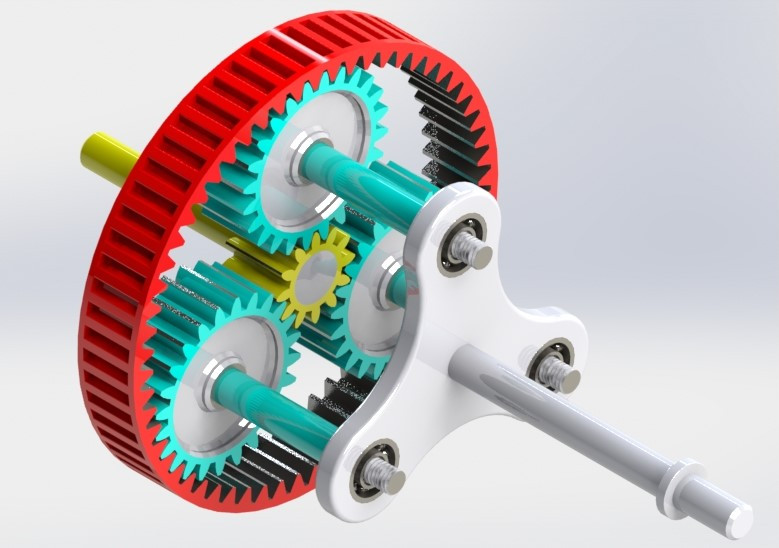
How do planetary gears handle changes in speed and torque distribution?
Planetary gears are capable of effectively handling changes in speed and torque distribution due to their unique design and configuration. Let’s explore how planetary gears handle these changes:
- Speed Changes:
Planetary gears can handle speed changes by utilizing the different gear ratios they offer. By adjusting the sizes and numbers of teeth on the sun gear, planet gears, and ring gear, different gear ratios can be achieved. When the input speed is applied to the sun gear, it gets transmitted to the planet gears, resulting in a specific output speed. By changing the gear ratio, the output speed can be adjusted accordingly. This ability to vary the gear ratio allows planetary gears to adapt to different speed requirements in mechanical systems.
- Torque Distribution:
Planetary gears excel in distributing torque across multiple gear teeth, ensuring efficient torque transmission and load sharing. The planet gears are meshed with both the sun gear and the ring gear, enabling torque to be transmitted through multiple contact points simultaneously. This distributed torque distribution helps in reducing stress on individual gear teeth and enhances the overall torque-carrying capacity of the gear system. The load is shared among the planet gears, preventing excessive wear and minimizing the risk of gear failure.
- Momentforsterkning:
Planetary gears can also handle torque amplification, allowing for increased torque output compared to the input torque. By fixing the ring gear and inputting power to the sun gear, the planet gears rotate and contribute to multiplying the torque. The arrangement of multiple gear sets in a compact design enables torque amplification, making planetary gears suitable for applications that require high torque output while maintaining a smaller physical size.
- Load Balancing:
Another aspect of torque distribution in planetary gears is load balancing. The planet gears distribute the load across multiple gear teeth, reducing the concentration of forces on individual teeth. This load balancing capability results in improved gear system durability and longevity. It also helps in minimizing vibration, noise, and wear, ensuring smoother and more reliable operation.
- Flexible Configuration:
Planetary gears offer flexibility in their configuration, allowing for the accommodation of changes in speed and torque distribution. The number of planet gears, the size of the gears, and their arrangement can be adjusted to meet specific application requirements. This flexibility enables planetary gears to handle a wide range of speed and torque variations, making them adaptable to different mechanical setups.
In summary, planetary gears handle changes in speed and torque distribution through their ability to adjust gear ratios, distribute torque across multiple gear teeth, amplify torque, balance loads, and accommodate flexible configurations. These characteristics make planetary gears suitable for applications that require precise control over speed and torque, efficient power transmission, and reliable performance.
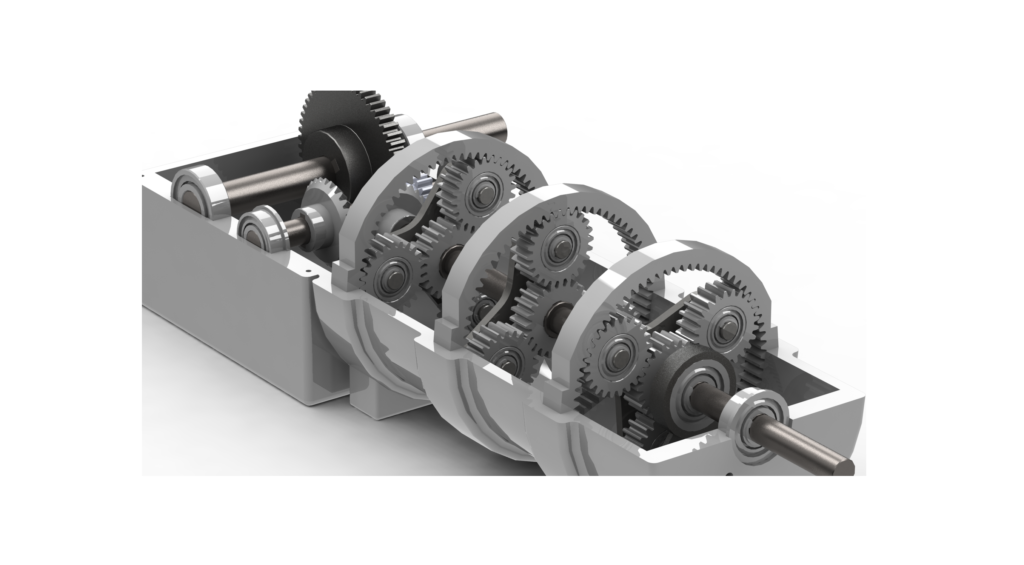
Can you explain the process of gear shifting in planetary gear systems?
Gear shifting in planetary gear systems involves changing the gear ratio by engaging or disengaging specific components of the gear set. Let’s explore the process of gear shifting in more detail:
- Clutching and Braking:
The gear shifting process in planetary gear systems primarily relies on clutching and braking mechanisms. These mechanisms selectively connect or disconnect various gears within the system to achieve the desired gear ratio. Here are the key steps involved:
- Clutch Engagement:
To shift to a higher gear ratio, the clutch associated with the gear component that needs to be engaged is activated. The clutch connects the rotating member, such as the sun gear, planet carrier, or ring gear, to the stationary member, allowing torque transmission. This engagement results in a change in the gear ratio, leading to higher speed or torque output depending on the specific gear set configuration.
- Brake Application:
On the other hand, to shift to a lower gear ratio, a brake associated with the gear component that needs to be disengaged is applied. The brake immobilizes or slows down the rotation of the selected gear element, preventing it from transmitting torque. By selectively braking certain components, the gear ratio is altered, resulting in a lower speed or higher torque output.
- Sequential Shifting:
In some planetary gear systems, gear shifting is performed sequentially. This means that one gear component is engaged or disengaged at a time, gradually transitioning from one gear ratio to another. Sequential shifting allows for smooth and controlled gear changes, minimizing the stress on the transmission components and ensuring seamless power transmission.
- Electronic Control:
In modern applications, gear shifting in planetary gear systems is often electronically controlled. Electronic control systems utilize sensors, actuators, and a control unit to monitor various parameters such as vehicle speed, engine load, and driver input. Based on these inputs, the control unit determines the optimal gear shift points and actuates the clutches and brakes accordingly. Electronic control enhances the efficiency, precision, and automation of the gear shifting process.
In summary, gear shifting in planetary gear systems involves the engagement and disengagement of clutches and brakes to alter the gear ratio. By selectively connecting or disconnecting specific gear components, the speed and torque output can be adjusted. Sequential shifting and electronic control systems further enhance the gear shifting process, providing smooth and efficient operation in various applications, including automotive transmissions and industrial machinery.

Kan du beskrive rollen til solhjul, planethjul og ringhjul i planetsystemer?
I et planetgirsystem spiller hver komponent – solgiret, planetgirene og ringgiret – en avgjørende rolle i den generelle driften og funksjonaliteten. La oss utforske rollene til disse girene:
- Solutstyr:
Solgiret er en sentral komponent i et planetgirsystem. Det er vanligvis plassert i midten og drives av en inngangskilde, for eksempel en motor. Solgiret mottar inngangseffekten og overfører den til de andre girene i systemet. Når solgiret roterer, driver det rotasjonen til planetgirene, som igjen bidrar til den totale girdriften. Størrelsen og antallet tenner på solgiret bestemmer systemets girforhold og dreiemomentegenskaper.
- Planetgir:
Planetgirene er gir som omgir solgiret i et planetgirsystem. De er vanligvis mindre i størrelse sammenlignet med solgiret og er koblet til en bærer eller arm. Planetgirene går i inngrep med både solgiret og ringgiret. Når solgiret roterer, driver det rotasjonen til planetgirene. Planetgirene viser både rotasjons- og orbitalbevegelse. Mens de roterer om sine egne akser, går de også i bane rundt solgiret. Denne kombinasjonen av rotasjons- og orbitalbevegelse lar planetgirene overføre dreiemoment og bidra til den totale girreduksjonen eller forsterkningen. Arrangementet og antallet planetgir kan variere avhengig av systemets spesifikke design og krav.
- Ringgir:
Ringgiret er det ytterste giret i et planetgirsystem. Det har innvendige tenner som går i inngrep med planetgirene. Ringgiret forblir fast eller stasjonært mens solgiret og planetgirene roterer. Samspillet mellom planetgirene og ringgiret gjør det mulig for girsystemet å oppnå girreduksjon eller -forsterkning. Størrelsen og antall tenner på ringgiret påvirker også systemets girforhold og dreiemomentegenskaper.
Kort sagt fungerer solgiret som den primære driveren, og mottar inngangseffekten og overfører den til de andre girene. Planetgirene roterer og går i bane rundt solgiret, noe som bidrar til dreiemomentoverføring og girfunksjonalitet. Ringgiret forblir fast og går i inngrep med planetgirene, noe som muliggjør girreduksjon eller -forsterkning. Sammen fungerer disse girene i harmoni for å oppnå ønskede girforhold, dreiemomentoverføring og generell drift av planetgirsystemer.


editor by CX 2023-11-02