Descrizione del prodotto
|
|
Descrizione del prodotto
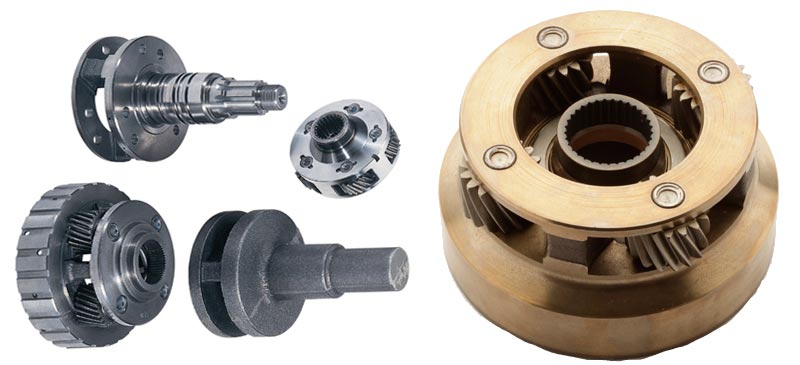
| Product name: | Custom Precision CNC Harden 40Cr Steel Planet Gear For Planetary Gearbox |
| Marketing Type: |
Hot Product 2019 |
| Core Components: | Planet Gear |
| Nome del marchio: | OEM |
| Materiale: | Steel, 40Cr Steel or OEM |
| Certificate: | ISO ROHS |
| Tolerance: | 0.01-0.05mm |
| Delivery Time: | 20-25 Days |
| port: | HangZhou |
Profilo Aziendale
HangZhou Dakunlun Hardware & Plastic Products Co.,Ltd. is a company engaged in Custom Products covering Custom CNC,Plastic Injection,Powder Metallurgy Parts ect. Hot Selling products include Gears,CNC Milling Parts Model Train Wheelsets Shaft,Bushing,Spacer and Brass Turning Parts ect.
Dakunlun was established in May 2006, cooperated with many enterprises at home and abroad (such as Fenda ,LG, Philips Dji and Nissan) to establish a long term friendly business relationship.Our inception is to absorb a variety of talents, improve product quality and staff quality Strict quality guarantee system and perfect management system, high-quality products after-
sales service is our foothold. Our company of “quality first, reputation first” principle, provide customers with quality and quantity of various types of products. Always uphold the “quality, integrity and pragmatic, motivated, service-oriented” business philosophy, and apply to the company’s management and operating. In face of fierce competition, our company’s system is constantly being improved, relying on science and technology, continuously improve the technology content of products sold, for society, customers and companies to create a higher market value. Dakunlun has been in good faith to create enterprises and has won a good reputation, also won the respect of our domestic counterparts.
Recent years our company has reached annual sales of as much as ¥30,000,000, Dakunlun will expand the scale of operation and steady development of corporate economic, sincerely seek partners, good faith cooperation and common developmen
Certificazioni
Work Shop Facility
Customer Visit
Imballaggio e spedizione
FAQ
1. Are you trading company or manufacturer?
We are a factory has 23 years.
2. How can i get a quotation?
Please send us information for quote: drawing,material,quantity or other requirement.We can accpet PDF,DWG,STEP file formate.If you don’t have the drawing,please send the sample to us,we can quote base on your sample too.
3. What’s your MOQ?
Depends on your specific items.
4. Do you provide samples?Is it free or extra.
Yes,but it’s not free.
5. What about the lead time for mass production?
Honestly,it depends on the order quantity.Normally,15 days to 20 days after your deposit if no tooling needed.
6. What if the part is not good?
We can guarantee good quantity.But if happened,please contact us immediately,take some pictures,we will check on the problem,and solve it asap.
7. How to deliver the good?
We deliver the products by courier company.
8. Can we get some samples before mass production?
Absolutely yes.
9. Will my drawings be safe after sending them to you?
Yes,we will keep them well and won’t release them to the third party without your permission.
| Applicazione: | Motor, Electric Cars, Motorcycle, Machinery, Marine, Toy, Agricultural Machinery, Car |
|---|---|
| Durezza: | Superficie del dente indurita |
| Gear Position: | External Gear |
| Manufacturing Method: | Rolling Gear |
| Toothed Portion Shape: | OEM |
| Materiale: | OEM |
| Esempi: |
US$ 100/Piece
1 pezzo (ordine minimo) | |
|---|
| Personalizzazione: |
Disponibile
| Richiesta personalizzata |
|---|
Come si calcola il rapporto di trasmissione che coinvolge ingranaggio solare, ingranaggio planetario e corona dentata?
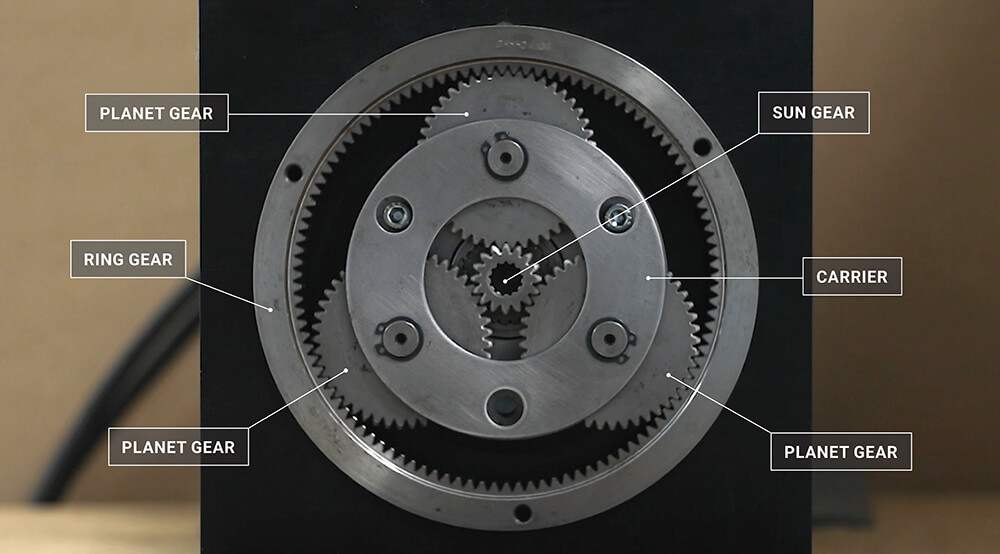
Il rapporto di trasmissione in un sistema di ingranaggi epicicloidali si calcola considerando il numero di denti dell'ingranaggio solare, degli ingranaggi planetari e della corona dentata. Il rapporto di trasmissione determina la relazione tra la velocità di ingresso e la velocità di uscita del sistema. Ecco come calcolare il rapporto di trasmissione:
- Passaggio 1: Conta i denti:
Conta il numero di denti dell'ingranaggio solare (S), degli ingranaggi planetari (P) e della corona dentata (R). Questi numeri rappresentano il numero di denti di ciascun ingranaggio.
- Fase 2: Determinare la configurazione degli ingranaggi:
Identifica la disposizione degli ingranaggi. In un semplice sistema di ingranaggi epicicloidali, l'ingranaggio solare si trova al centro, circondato dagli ingranaggi planetari e racchiuso dalla corona dentata.
- Passaggio 3: Calcolare il rapporto di trasmissione:
Il rapporto di trasmissione (GR) può essere determinato utilizzando la formula:
GR = (R + P) / S
Dove:
- R rappresenta il numero di denti sulla corona dentata
- P rappresenta il numero di denti sugli ingranaggi planetari (supponendo che abbiano lo stesso numero di denti)
- S rappresenta il numero di denti sull'ingranaggio solare
Il rapporto di trasmissione risultante rappresenta la relazione di velocità tra l'ingresso e l'uscita del sistema di ingranaggi epicicloidali. Un rapporto di trasmissione maggiore di 1 indica una riduzione di velocità, mentre un rapporto di trasmissione inferiore a 1 indica un aumento di velocità.
È importante notare che nei sistemi di ingranaggi epicicloidali più complessi, dove sono presenti più serie di ingranaggi planetari o ingranaggi aggiuntivi, il calcolo del rapporto di trasmissione può comportare la considerazione di più stadi di ingranaggi e del rispettivo numero di denti.
In sintesi, per calcolare il rapporto di trasmissione che coinvolge ingranaggi solari, planetari e corona dentata, è necessario contare il numero di denti di ciascun ingranaggio e utilizzare la formula (R + P) / S, dove R è il numero di denti della corona dentata, P è il numero di denti degli ingranaggi planetari e S è il numero di denti dell'ingranaggio solare. Questo calcolo fornisce il rapporto di trasmissione che definisce la relazione di velocità tra l'ingresso e l'uscita del sistema di ingranaggi epicicloidali.
How do planetary gears handle variations in direction and torque transmission?
Planetary gears are versatile mechanisms that can effectively handle variations in direction and torque transmission. Let’s explore how they achieve this:
- Direction Reversal:
Planetary gears are capable of transmitting torque in both forward and reverse directions. By changing the input and output connections, the direction of rotation can be reversed without the need for additional components or complex mechanisms. This makes planetary gears well-suited for applications where frequent changes in direction are required, such as automotive transmissions.
- Torque Amplification and Reduction:
One of the notable characteristics of planetary gears is their ability to amplify or reduce torque depending on the arrangement of gear components. Let’s consider a basic arrangement with a sun gear, planet gears, and a ring gear:
- Torque Amplification:
When the sun gear is the input and the ring gear is the output, the planet gears rotate on their own axes while also revolving around the sun gear. This arrangement allows for torque amplification, meaning the output torque can be higher than the input torque. This is particularly useful in applications where higher torque is required, such as heavy machinery or power transmission systems.
- Torque Reduction:
Conversely, by fixing the ring gear and using the sun gear as the output, the planet gears rotate on their own axes while also revolving around the fixed ring gear. In this configuration, the output torque is lower than the input torque, enabling torque reduction. This can be advantageous in applications where torque needs to be reduced, such as speed reduction systems or precision machinery.
- Combination of Gear Stages:
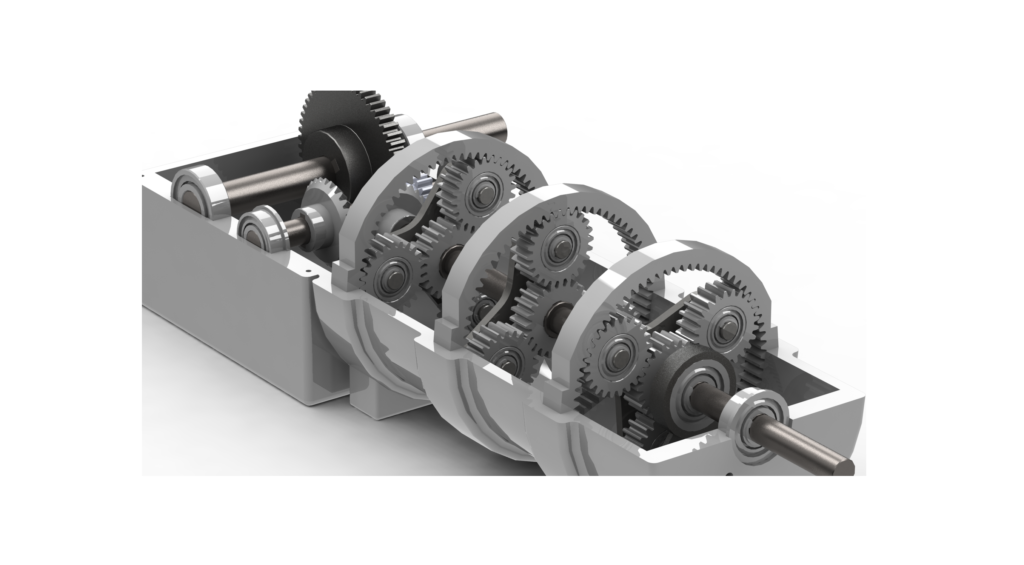
Planetary gears can be combined into multiple stages, with each stage having its own set of sun gears, planet gears, and ring gears. This arrangement allows for further variations in torque transmission. By connecting the output of one stage to the input of another, the torque can be further amplified or reduced, providing flexibility in power transmission systems.
- Custom Gear Ratios:
By selecting the appropriate sizes and numbers of teeth for the sun gears, planet gears, and ring gears, custom gear ratios can be achieved in planetary gear systems. This allows for precise control over torque transmission and enables the adaptation of the gear arrangement to specific application requirements.
In summary, planetary gears handle variations in direction and torque transmission through their ability to reverse direction without additional components, torque amplification or reduction based on gear arrangement, combination of multiple gear stages, and the ability to achieve custom gear ratios. These features make planetary gears a versatile choice for a wide range of applications requiring efficient and flexible power transmission.
What industries commonly use planetary gears in their applications?
Planetary gears find applications in a wide range of industries and mechanical systems. Let’s explore some of the industries that commonly utilize planetary gears:
- Automotive Industry:
The automotive industry extensively uses planetary gears in various applications. Planetary gears are commonly found in automatic transmissions, where they enable smooth gear shifting, provide different gear ratios, and transmit torque efficiently. They are also used in differential systems, allowing wheels to rotate at different speeds while maintaining power distribution.
- Robotics and Automation:
Planetary gears play a crucial role in robotics and automation systems. They are employed in robotic joints and actuators to provide precise motion control, compact size, and high torque transmission. Planetary gears enable robotic arms to move accurately and handle heavy loads, making them essential components in industrial robots and robotic manipulators.
- Aerospace and Aviation:
The aerospace and aviation industries utilize planetary gears in various applications. They are used in aircraft landing gear systems, where they provide reliable torque transmission and compact design. Planetary gears are also employed in aircraft engine systems, helicopter rotor systems, and satellite mechanisms due to their efficiency, high torque capacity, and ability to operate in space-restricted environments.
- Power Generation:
Planetary gears are utilized in power generation equipment, including wind turbines and hydroelectric generators. In wind turbines, planetary gears enable the conversion of low-speed rotor rotation to high-speed generator rotation, ensuring efficient power generation. They are also employed in hydroelectric generators to transmit power from turbines to electrical generators, providing gear reduction and torque amplification.
- Industrial Machinery:
Planetary gears are widely used in industrial machinery applications. They are found in heavy-duty machinery such as mining equipment, construction machinery, and material handling systems. Planetary gears provide high torque transmission, compactness, and durability, making them suitable for handling demanding tasks in industrial environments.
- Marine and Shipbuilding:
The marine and shipbuilding industries employ planetary gears in various marine propulsion systems. They are used in marine engines, propeller systems, and thrusters. Planetary gears provide efficient power transmission, speed control, and compact design for propulsion systems in vessels ranging from small boats to large ships.
- Medical Equipment:
In the medical field, planetary gears are utilized in various equipment and devices. They are found in medical imaging systems like CT scanners and MRI machines, providing precise motion control and reducing image distortion. Planetary gears are also used in surgical robots and medical devices that require compact size, high torque, and accurate positioning.
These are just a few examples of the industries that commonly use planetary gears in their applications. The versatility, efficiency, and compactness of planetary gears make them suitable for a broad range of industries where precise motion control, torque transmission, and space-saving design are essential requirements.


editor by CX 2023-11-01