Descrizione del prodotto
Swing Motor CX210B Planetary Sun Gear SM 2nd KRC10560 LCA1 9571B 16571A1 9571B 16 0571 A1 CX130 16571A1 CX A1 9571B 161323A1 9030 155826A1 9030B 160560A1 CX210 431853A1 CX210B KRC1571 CX290 KSC5710 CX330 KSC5717
Hyundai
R180LC-3 RG08S-172-01 R2 EC210 7118-35710 EC210B 14541069 EC330 1055-0571 EC330B 1055-0571 EC360 1055-0571 EC360B 1055-0571
Sumitomo
SH120 KNC0087 SH200-5 KRC1571 SH300A-5 KSC5717
Kato
HD700SEV HD800V2 HD820-II
JCB
JS130 KNC0051 JS130 LNM571 LS-2650C-II KNC0037 2650Q KNC0051 2650Q LNM571 130LX KMC0078 130LX LNM571 2700Q LNM0449
CAT
312B 114-8226 320B 320C 148-4644 320L 7Y-1566 322C 191-2693 324D 325C 325B 110-7215 325D 329D 330B 114-1305 330C 330D 330L 199-4539 345D 296-6249
Kobelco
SK60V YRW00002F1 SK70SR YT32W00002F1 SK80CS YT32W00002F2 SK115SR YX32W00002F1 SK135SR YX32W00002F2 SK135SR-2 YY32W00004F1 SK200-8 YN32W00571F2 SK210-6 YN32W00571F1 SK330-6 LC32W00011F1 SK350-8 LC32W00011F1
Komatsu
PC60-5-6-7, PC100, PC120-5-6-7, PC130-5-6-7, PC150-6, PC160, PC180, PC200-1-3-5-6-7, PC200LC-7, PC210LC-6, PC220-1-3-5, PC220-7, PC228, PC250-6, PC270LC-6, PC280, PC300-3-5-6-7, PC350, PC4001-3-5
Hitachi
EX40, EX60, EX150, EX100M, EX100, EX120, EX150, EX200-1-2-3, EX300-1-3-5, EX400, UH08, UH07 ZX55 ZX60 ZX70 ZX110 ZX120 ZX130 ZX160 ZX200 ZX210 ZX240 ZX270 ZX330 ZX350 ZX450
Parts Details
Our Advantages
Main Products
| Marca: | Komatsu , , CHINAMFG , Vol Vo , CHINAMFG , CHINAMFG , CHINAMFG , CHINAMFG , CHINAMFG , CHINAMFG , CHINAMFG , CHINAMFG 3CX 4CX Backhoe Loader |
| egory: | Spare Parts: |
| Advantaged Products: | Excavator Hydraulic Pump , Swing Motor Assy , Travel Motor Assy , Turbocharger , Water Pump , Main&Relief Valve Group … |
| Electrical Parts: | Excavator Solenoid Valve , Sensor , Switch , Controller , Monitor , Accelerator , Stater Motor , Alternator , Wipper Motor , Lamp , Water Tank …. |
| Engine Parts: | Excavator Engine Assy , Cylinder Head , Cylinder Block , Crankshaft , Camshaft , Linner Kits ( Piston / Piston Ring / Linner / Bearing ) , Gasket Kits , Overhaul Kits , Connecting Rod , Valve , Injector… |
| Cooling Parts: | Excavator Hydraulic Oil Cooler , Radiator , Oil Cooler Cover , Oil Cooler Assy , Fan , Blower Motor, EGR Pipe , Valve Chamber Cover… |
| Rubber Parts: | Excavator O-Ring , Seal Kits , Floor Mate Rubber , Coupling , Engine Belt , Belt Tensioner… |
| Hose & Harness Parts: | Excavator Pipe In , Manifold Exhaust , Water Hose , Oil Tube , Cabin Harness , Engine Harness… |
| Filtering Parts: | Excavator Oil Filter , Fuel Filter , Air Filter , Oil Separator , Air Filter Cover … |
Customer high Praise
Profilo Aziendale
Xihu (West Lake) Dis.an Machine Equipment Co., Ltd.( KOKO SHOP)
HangZhou Xihu (West Lake) Dis.an Machinery Equipment Co., Ltd. Our company was established in 2011.
Xihu (West Lake) Dis.an is a professional spare parts manufacturer and reliable supplier, providing almost all spare parts for various models rock breakers.
Specializes in:
Excavator accessories
Hydraulic breaker accessories
Breaker Spare Parts Suitable for the brands: SOOSAN, FURUKAWA, KRUPP, ATLAS-COPCO, EDT, JCB, NPK, , HANWOO, TOKU, FINE, OKADA, XIHU (WEST LAKE) DIS., MONTABERT, INDECO, KWANGLIM, RAMMER, KONAN, KOMATSU, GENERAL etc. Excavator Spare Parts Suitable for the brands: CATEE, KOMATSU, HITACHI, VOLVO, KOBELCO, CASE, SUMITOMO, DOOSA, NHYUNDAI, SANY, XG ect. The logistics in HangZhou is very convenient that we deliver goods to the whole world.
| Servizio post-vendita: | Online |
|---|---|
| Garanzia: | Online |
| Tipo: | Wheel Excavator |
| Utilizzo: | Special Excavator, Marine Excavator, Mining Excavator, GM Excavator |
| Bucket: | Backhoe |
| Transmission: | Hydraulic Transmission |
| Personalizzazione: |
Disponibile
| Richiesta personalizzata |
|---|
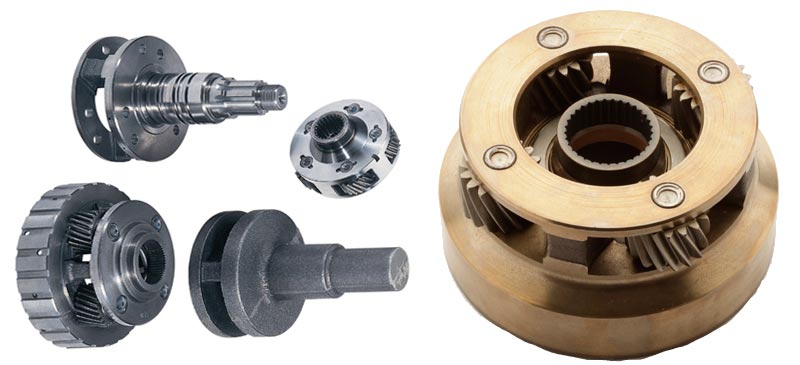
Come si calcola il rapporto di trasmissione che coinvolge ingranaggio solare, ingranaggio planetario e corona dentata?
Il rapporto di trasmissione in un sistema di ingranaggi epicicloidali si calcola considerando il numero di denti dell'ingranaggio solare, degli ingranaggi planetari e della corona dentata. Il rapporto di trasmissione determina la relazione tra la velocità di ingresso e la velocità di uscita del sistema. Ecco come calcolare il rapporto di trasmissione:
- Passaggio 1: Conta i denti:
Conta il numero di denti dell'ingranaggio solare (S), degli ingranaggi planetari (P) e della corona dentata (R). Questi numeri rappresentano il numero di denti di ciascun ingranaggio.
- Fase 2: Determinare la configurazione degli ingranaggi:
Identifica la disposizione degli ingranaggi. In un semplice sistema di ingranaggi epicicloidali, l'ingranaggio solare si trova al centro, circondato dagli ingranaggi planetari e racchiuso dalla corona dentata.
- Passaggio 3: Calcolare il rapporto di trasmissione:
Il rapporto di trasmissione (GR) può essere determinato utilizzando la formula:
GR = (R + P) / S
Dove:
- R rappresenta il numero di denti sulla corona dentata
- P rappresenta il numero di denti sugli ingranaggi planetari (supponendo che abbiano lo stesso numero di denti)
- S rappresenta il numero di denti sull'ingranaggio solare
Il rapporto di trasmissione risultante rappresenta la relazione di velocità tra l'ingresso e l'uscita del sistema di ingranaggi epicicloidali. Un rapporto di trasmissione maggiore di 1 indica una riduzione di velocità, mentre un rapporto di trasmissione inferiore a 1 indica un aumento di velocità.
È importante notare che nei sistemi di ingranaggi epicicloidali più complessi, dove sono presenti più serie di ingranaggi planetari o ingranaggi aggiuntivi, il calcolo del rapporto di trasmissione può comportare la considerazione di più stadi di ingranaggi e del rispettivo numero di denti.
In sintesi, per calcolare il rapporto di trasmissione che coinvolge ingranaggi solari, planetari e corona dentata, è necessario contare il numero di denti di ciascun ingranaggio e utilizzare la formula (R + P) / S, dove R è il numero di denti della corona dentata, P è il numero di denti degli ingranaggi planetari e S è il numero di denti dell'ingranaggio solare. Questo calcolo fornisce il rapporto di trasmissione che definisce la relazione di velocità tra l'ingresso e l'uscita del sistema di ingranaggi epicicloidali.
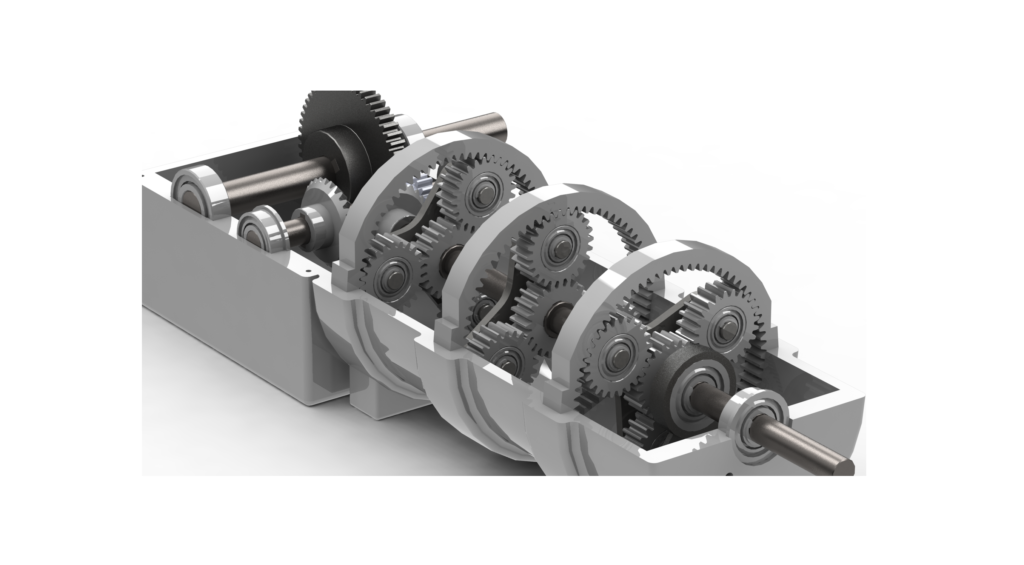
Can you explain the process of gear shifting in planetary gear systems?
Gear shifting in planetary gear systems involves changing the gear ratio by engaging or disengaging specific components of the gear set. Let’s explore the process of gear shifting in more detail:
- Clutching and Braking:
The gear shifting process in planetary gear systems primarily relies on clutching and braking mechanisms. These mechanisms selectively connect or disconnect various gears within the system to achieve the desired gear ratio. Here are the key steps involved:
- Clutch Engagement:
To shift to a higher gear ratio, the clutch associated with the gear component that needs to be engaged is activated. The clutch connects the rotating member, such as the sun gear, planet carrier, or ring gear, to the stationary member, allowing torque transmission. This engagement results in a change in the gear ratio, leading to higher speed or torque output depending on the specific gear set configuration.
- Brake Application:
On the other hand, to shift to a lower gear ratio, a brake associated with the gear component that needs to be disengaged is applied. The brake immobilizes or slows down the rotation of the selected gear element, preventing it from transmitting torque. By selectively braking certain components, the gear ratio is altered, resulting in a lower speed or higher torque output.
- Sequential Shifting:
In some planetary gear systems, gear shifting is performed sequentially. This means that one gear component is engaged or disengaged at a time, gradually transitioning from one gear ratio to another. Sequential shifting allows for smooth and controlled gear changes, minimizing the stress on the transmission components and ensuring seamless power transmission.
- Electronic Control:
In modern applications, gear shifting in planetary gear systems is often electronically controlled. Electronic control systems utilize sensors, actuators, and a control unit to monitor various parameters such as vehicle speed, engine load, and driver input. Based on these inputs, the control unit determines the optimal gear shift points and actuates the clutches and brakes accordingly. Electronic control enhances the efficiency, precision, and automation of the gear shifting process.
In summary, gear shifting in planetary gear systems involves the engagement and disengagement of clutches and brakes to alter the gear ratio. By selectively connecting or disconnecting specific gear components, the speed and torque output can be adjusted. Sequential shifting and electronic control systems further enhance the gear shifting process, providing smooth and efficient operation in various applications, including automotive transmissions and industrial machinery.
What industries commonly use planetary gears in their applications?
Planetary gears find applications in a wide range of industries and mechanical systems. Let’s explore some of the industries that commonly utilize planetary gears:
- Automotive Industry:
The automotive industry extensively uses planetary gears in various applications. Planetary gears are commonly found in automatic transmissions, where they enable smooth gear shifting, provide different gear ratios, and transmit torque efficiently. They are also used in differential systems, allowing wheels to rotate at different speeds while maintaining power distribution.
- Robotics and Automation:
Planetary gears play a crucial role in robotics and automation systems. They are employed in robotic joints and actuators to provide precise motion control, compact size, and high torque transmission. Planetary gears enable robotic arms to move accurately and handle heavy loads, making them essential components in industrial robots and robotic manipulators.
- Aerospace and Aviation:
The aerospace and aviation industries utilize planetary gears in various applications. They are used in aircraft landing gear systems, where they provide reliable torque transmission and compact design. Planetary gears are also employed in aircraft engine systems, helicopter rotor systems, and satellite mechanisms due to their efficiency, high torque capacity, and ability to operate in space-restricted environments.
- Power Generation:
Planetary gears are utilized in power generation equipment, including wind turbines and hydroelectric generators. In wind turbines, planetary gears enable the conversion of low-speed rotor rotation to high-speed generator rotation, ensuring efficient power generation. They are also employed in hydroelectric generators to transmit power from turbines to electrical generators, providing gear reduction and torque amplification.
- Industrial Machinery:
Planetary gears are widely used in industrial machinery applications. They are found in heavy-duty machinery such as mining equipment, construction machinery, and material handling systems. Planetary gears provide high torque transmission, compactness, and durability, making them suitable for handling demanding tasks in industrial environments.
- Marine and Shipbuilding:
The marine and shipbuilding industries employ planetary gears in various marine propulsion systems. They are used in marine engines, propeller systems, and thrusters. Planetary gears provide efficient power transmission, speed control, and compact design for propulsion systems in vessels ranging from small boats to large ships.
- Medical Equipment:
In the medical field, planetary gears are utilized in various equipment and devices. They are found in medical imaging systems like CT scanners and MRI machines, providing precise motion control and reducing image distortion. Planetary gears are also used in surgical robots and medical devices that require compact size, high torque, and accurate positioning.
These are just a few examples of the industries that commonly use planetary gears in their applications. The versatility, efficiency, and compactness of planetary gears make them suitable for a broad range of industries where precise motion control, torque transmission, and space-saving design are essential requirements.


editor by CX 2023-11-06